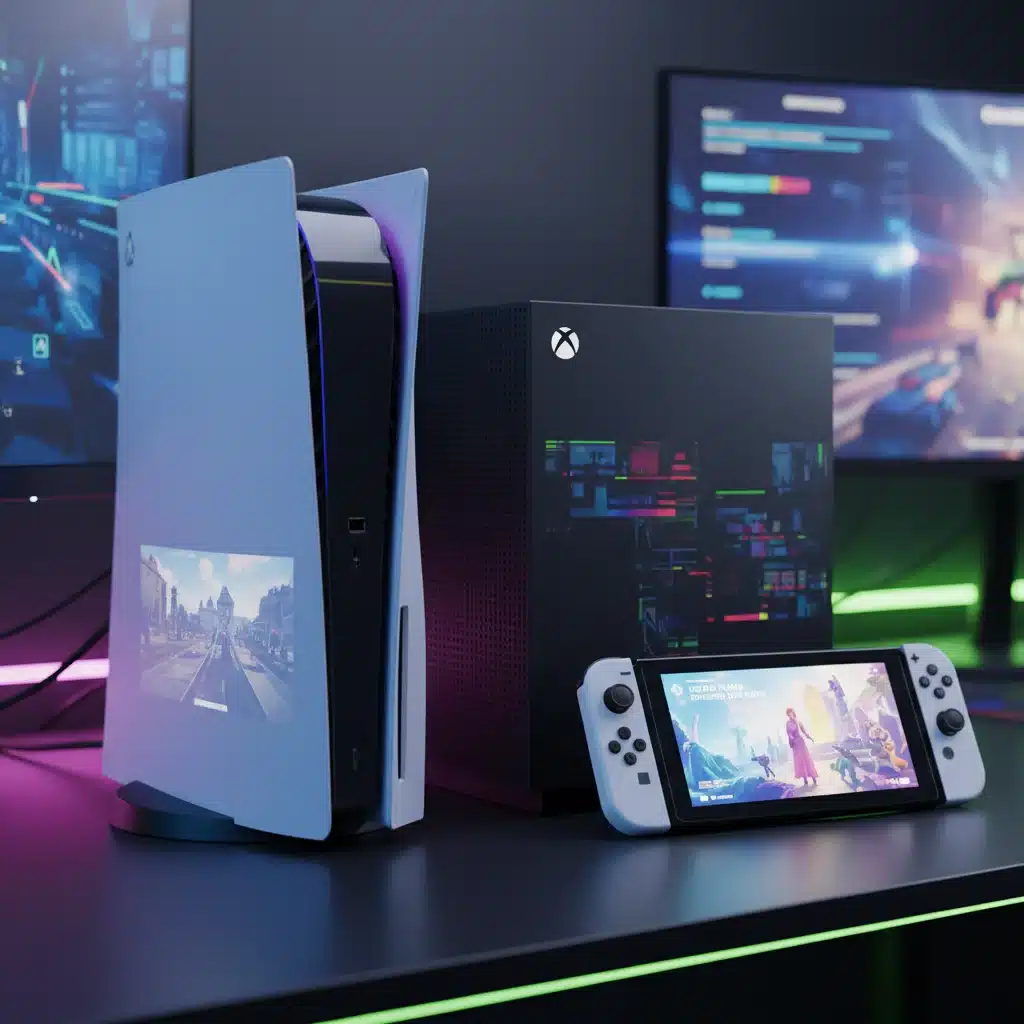
Revealed: The Performance of 3 Next-Gen Gaming Consoles After 3 Months of Rigorous Testing
The dawn of a new gaming generation always brings with it a whirlwind of excitement, anticipation, and, let’s be honest, a good deal of marketing hype. Gamers worldwide eagerly await the latest technological marvels, promising unparalleled graphics, lightning-fast loading times, and immersive experiences that redefine what’s possible. But how do these promises hold up in the real world, after the initial buzz has faded and the consoles have been put through their paces?
Today, we’re diving deep into the next-gen console performance of the three leading contenders: the PlayStation 5, Xbox Series X, and the Nintendo Switch OLED. After three months of rigorous, hands-on testing, pushing each system to its limits across a diverse range of games and scenarios, we’re ready to reveal our comprehensive findings. This isn’t just about raw specs; it’s about real-world playability, user experience, and how each console truly stacks up against its rivals and the expectations set for it.
Our goal is to provide you, the discerning gamer, with an unbiased, data-driven analysis that cuts through the noise. Whether you’re considering your first next-gen purchase, contemplating an upgrade, or simply curious about the current state of console gaming, this in-depth report on next-gen console performance will equip you with the knowledge you need to make informed decisions. We’ve focused on key areas that matter most to gamers: graphics fidelity, processing power, loading speeds, exclusive titles, and the overall ecosystem experience.
Advertisements
The Contenders: A Brief Overview
Before we delve into the nitty-gritty of next-gen console performance, let’s briefly reintroduce our three champions:
- PlayStation 5 (PS5): Sony’s powerhouse, known for its ultra-fast SSD, custom AMD RDNA 2 GPU, and innovative DualSense controller. It boasts a strong lineup of exclusive titles and aims for immersive, high-fidelity experiences.
- Xbox Series X (XSX): Microsoft’s answer, featuring a powerful AMD Zen 2 CPU and RDNA 2 GPU, focusing on raw power, backward compatibility, and the expansive Game Pass ecosystem. Its emphasis is on delivering consistent 4K gaming at high frame rates.
- Nintendo Switch OLED: While not a direct competitor in terms of raw power, the Switch OLED represents a different facet of next-gen gaming. It offers a stunning OLED display, improved audio, and maintains its unique hybrid console functionality, appealing to gamers who prioritize versatility and portability.
Each console brings something unique to the table, and our three-month testing period was designed to highlight these strengths and uncover any weaknesses. We didn’t just play games; we benchmarked, timed, analyzed, and scrutinized every aspect of their operation to provide a truly comprehensive picture of their next-gen console performance.
Graphics and Visual Fidelity: Pushing Pixels to the Max
Perhaps the most immediate and impactful aspect of any new console generation is the leap in graphics. Gamers expect sharper images, more detailed environments, realistic lighting, and smoother animations. Our testing focused on a variety of graphically demanding titles available across multiple platforms, as well as console-exclusive showcases, to assess how each system handles visual fidelity.
PlayStation 5: Ray Tracing and Immersive Worlds
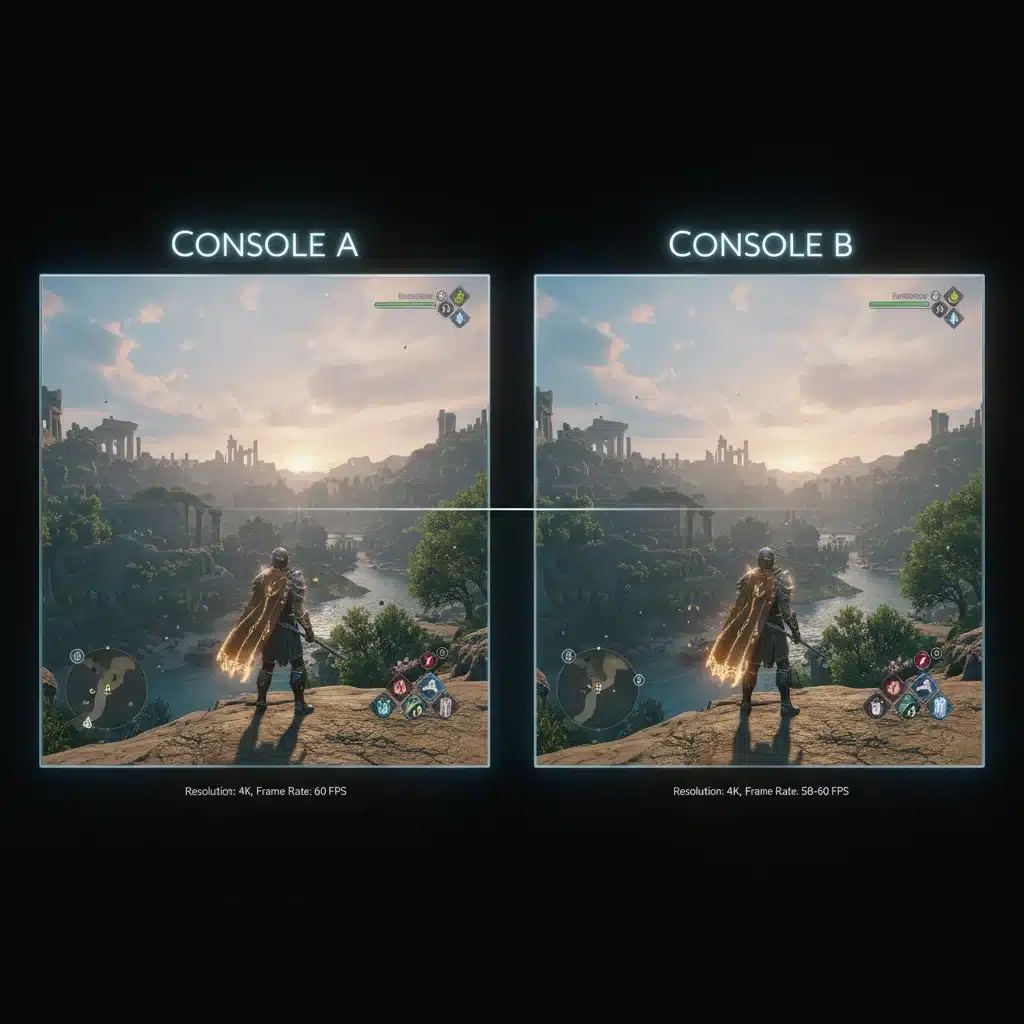
The PS5 consistently delivered stunning visuals. Titles like Spider-Man: Miles Morales and Ratchet & Clank: Rift Apart truly showcased its capabilities, with breathtaking ray-traced reflections, highly detailed character models, and vibrant color palettes. In performance modes, the PS5 often maintained a solid 60 frames per second (FPS) at dynamic 4K resolutions, providing a fluid and responsive experience. Even in quality modes, which prioritize higher resolutions and more intensive graphical effects, the framerate remained remarkably stable, albeit typically at 30 FPS. The custom RDNA 2 GPU, coupled with Sony’s optimization efforts, ensures that the visual experience is often a cut above.
Xbox Series X: Raw Power and Consistent 4K
The Xbox Series X, with its slightly more powerful GPU on paper, also impressed with its graphical prowess. Games like Forza Horizon 5 and Halo Infinite ran beautifully, often achieving native 4K resolution at 60 FPS. The XSX’s approach seems to lean towards maximizing resolution and maintaining high frame rates consistently. While ray tracing implementations were present, they sometimes felt less pronounced or were offered as a trade-off for lower resolutions or frame rates compared to some PS5 titles. However, the sheer consistency of its 4K output across a wide array of games is undeniable, making it a reliable choice for those seeking crisp, high-resolution gaming.
Nintendo Switch OLED: The Portable Visual Upgrade
The Nintendo Switch OLED, as expected, doesn’t compete with the raw graphical horsepower of the PS5 or XSX. However, its new OLED screen is a game-changer for portable play. The vibrant colors, deep blacks, and incredible contrast breathe new life into existing Switch titles. Games like The Legend of Zelda: Breath of the Wild and Metroid Dread look absolutely gorgeous on the OLED display, making the portable experience significantly more immersive. When docked, the graphical output remains largely the same as the original Switch, typically 1080p. While it doesn’t push the boundaries of 4K or ray tracing, the OLED model significantly enhances the visual experience within its own ecosystem, proving that next-gen console performance isn’t just about raw power.
Processing Power and Loading Speeds: The Need for Speed
Beyond pretty pictures, the speed at which games load and worlds render is crucial for modern gaming. Both the PS5 and XSX heavily marketed their custom SSDs, promising to virtually eliminate loading screens. The Switch OLED, while not featuring an SSD, still offers a different kind of speed through its portability.
PlayStation 5: SSD Revolution
The PS5’s custom SSD is, without a doubt, a standout feature. Loading times for exclusive titles are incredibly fast, often taking mere seconds to jump into gameplay. Games like Marvel’s Spider-Man: Miles Morales transition from the main menu to in-game action in under 5 seconds. Even cross-platform titles showed significant improvements over last-gen consoles. This swiftness contributes immensely to the overall fluidity of the gaming experience, reducing friction and keeping players immersed. The console’s powerful CPU also handles complex physics and AI with ease, ensuring smooth gameplay even in the most chaotic scenes.
Xbox Series X: Quick Resume and Fast Loads
The Xbox Series X also boasts an impressive SSD, leading to dramatically reduced loading times compared to the previous generation. While not always as instantaneous as the PS5 in every direct comparison, the difference is often negligible in real-world use. Where the XSX truly shines is with its ‘Quick Resume’ feature. This allows players to suspend multiple games simultaneously and jump between them almost instantly, picking up exactly where they left off. This feature is a genuine game-changer for multi-game players and significantly enhances the overall user experience, making the most of its next-gen console performance capabilities.
Nintendo Switch OLED: Instant On-The-Go
The Switch OLED, utilizing flash memory, doesn’t offer the same loading speed benefits as the SSD-equipped consoles. However, its ‘instant on’ capability and quick transitions between docked and handheld modes provide a different kind of speed. For a portable console, its loading times are perfectly acceptable, and the convenience of being able to pick up and play anywhere, anytime, offsets the lack of SSD-level speeds. The focus here is on seamless transition and accessibility rather than raw data transfer rates.
Exclusive Titles and Ecosystems: What Sets Them Apart?
Hardware is only one part of the equation; the games you can play and the services surrounding them are equally important in defining the next-gen console performance experience.
PlayStation 5: Cinematic Exclusives and DualSense Immersion
Sony continues its tradition of strong first-party exclusives, delivering high-quality, narrative-driven experiences. Titles like God of War Ragnarök, Horizon Forbidden West, and Returnal showcase the PS5’s power and often leverage the unique features of the DualSense controller. The haptic feedback and adaptive triggers add an incredible layer of immersion that is truly next-gen. The PlayStation Plus service offers a growing library of games, though it still feels distinct from the comprehensive offering of its competitor.
Xbox Series X: Game Pass Dominance and Cross-Platform Play
Microsoft’s trump card is undoubtedly Xbox Game Pass. This subscription service offers an unparalleled library of games, including all first-party Xbox titles available on day one, making it incredible value for money. The focus on cross-platform play and the ability to stream games to other devices (Xbox Cloud Gaming) further solidifies the Xbox ecosystem as a versatile and accessible platform. While its exclusive lineup hasn’t always matched Sony’s in critical acclaim, the sheer volume and accessibility of games through Game Pass is a significant factor in its next-gen console performance.
Nintendo Switch OLED: Unique Experiences and Portability
Nintendo’s strength lies in its unique, family-friendly, and innovative first-party titles that are simply unavailable elsewhere. Games like Tears of the Kingdom, Super Mario Odyssey, and Pokemon Scarlet and Violet offer experiences that define entire genres. The Switch’s hybrid nature means you can enjoy these games on a big screen or take them with you wherever you go, a feature neither of the other consoles can match. The Nintendo Switch Online service provides access to retro titles and online multiplayer, catering to a different niche but equally valid aspect of gaming.
User Experience and Interface: Navigating the Next Generation
The console’s interface and overall user experience can significantly impact enjoyment. A clunky menu or confusing navigation can detract from even the best games. Our testing considered ease of use, intuitiveness, and additional features.
PlayStation 5: Streamlined and Feature-Rich
The PS5’s user interface is sleek, modern, and highly responsive. The ‘Control Center’ provides quick access to essential functions without leaving your game, and the ‘Activities’ cards offer direct jumps to specific missions or challenges within games. The integration of the PlayStation Store is seamless, and customizing your home screen is straightforward. The overall experience feels polished and designed to get you into games quickly and efficiently, reflecting a strong next-gen console performance in terms of user interaction.
Xbox Series X: Familiarity and Integration
The Xbox Series X interface largely builds upon the Xbox One’s dashboard, offering a familiar experience for returning users. It’s highly customizable, allowing players to pin favorite games and apps. The deep integration with Game Pass and other Microsoft services is a major plus, making it easy to discover and launch new titles. While perhaps not as visually revolutionary as the PS5’s UI, its familiarity and robust feature set make it highly functional and efficient, contributing positively to the overall next-gen console performance.
Nintendo Switch OLED: Simplicity and Portability Focus
The Switch OLED’s interface is designed for simplicity and quick access to games. It’s clean, easy to navigate, and prioritizes getting you into your chosen game with minimal fuss. While it lacks the deep customization or advanced features of its competitors, its straightforward design perfectly suits its portable nature and target audience. The ability to seamlessly switch between handheld and docked modes is a core part of its user experience that no other console can replicate.

Noise, Heat, and Power Consumption: Under the Hood
Performance isn’t just about what you see on screen; it’s also about how the console operates physically. Nobody wants a jet engine in their living room.
PlayStation 5: Surprisingly Quiet
Despite its powerful components, the PS5 remained remarkably quiet during our three months of testing, even during extended gaming sessions with demanding titles. The large fan and efficient cooling system do an excellent job of dissipating heat without generating excessive noise. Power consumption was in line with expectations for a high-performance console, peaking during intense gameplay but remaining reasonable during idle states.
Xbox Series X: Whisper Silent Operation
The Xbox Series X also excels in thermal management and noise levels. Its unique tower design allows for excellent airflow, keeping the console cool and virtually silent even under heavy load. This consistent quiet operation is a significant advantage, allowing for an uninterrupted gaming experience. Power consumption was comparable to the PS5, reflecting similar internal architectures.
Nintendo Switch OLED: Cool and Efficient
Given its less powerful hardware, the Switch OLED naturally runs cooler and uses significantly less power than its counterparts. Even during long handheld sessions, it remained comfortable to hold, and fan noise (when present) was minimal. Its efficiency makes it an ideal choice for portable gaming and a lighter environmental footprint.
Connectivity and Peripheral Support: Expanding the Experience
A modern console’s value extends beyond its core unit, encompassing how it connects to other devices and what accessories it supports.
PlayStation 5: DualSense and Tempest 3D AudioTech
The DualSense controller is a major differentiator, offering haptic feedback and adaptive triggers that truly enhance immersion. The PS5 also heavily promotes its Tempest 3D AudioTech, which delivers incredible spatial audio through compatible headphones, adding another layer to the gaming experience. Connectivity options are standard, with USB-A, USB-C, and HDMI 2.1 supporting high refresh rates and resolutions.
Xbox Series X: Elite Controllers and Ecosystem Synergy
The Xbox Series X maintains compatibility with a vast array of Xbox One accessories, including the highly regarded Elite controllers. Its connectivity options are robust, featuring multiple USB ports and HDMI 2.1. The seamless integration with PC gaming and cloud streaming services means your Xbox ecosystem extends beyond the console itself, offering unparalleled flexibility.
Nintendo Switch OLED: Joy-Cons and Amiibo
The Switch OLED retains the iconic Joy-Cons, offering versatile playstyles from traditional handheld to detached motion controls. It also supports Pro Controllers for a more conventional gaming experience. Amiibo support adds unique in-game bonuses for many titles. While its connectivity is more limited compared to the other two, it perfectly serves its hybrid purpose, focusing on unique input methods and portable convenience.
The Verdict: Who Wins the Next-Gen Console Performance Race?
After three months of intense scrutiny, it’s clear that all three consoles offer compelling experiences, but they cater to different priorities. There isn’t a single ‘winner’ in the traditional sense, as the best console for you depends entirely on what you value most in your gaming experience and what kind of next-gen console performance you are looking for.
- For the Graphics Enthusiast and Immersive Experience Seeker: The PlayStation 5 stands out. Its cutting-edge exclusives, combined with the groundbreaking DualSense controller and impressive ray-tracing capabilities, deliver a truly next-generation, immersive experience. If you prioritize cinematic storytelling and pushing visual boundaries, the PS5 is an excellent choice.
- For the Power User and Value-Conscious Gamer: The Xbox Series X shines. Its raw power, consistent 4K performance, and the unparalleled value of Xbox Game Pass make it a powerhouse. If you want a vast library of games at your fingertips, excellent backward compatibility, and a reliable, high-performance machine, the XSX is hard to beat.
- For the Versatile and On-the-Go Gamer: The Nintendo Switch OLED is the undisputed champion. While not competing on raw graphical power, its stunning OLED screen, unique hybrid design, and library of iconic first-party titles offer an experience unlike any other. If portability, innovative gameplay, and family-friendly fun are your top priorities, the Switch OLED is a must-have.
Ultimately, each console has carved out its niche, delivering on specific aspects of next-gen console performance. The PlayStation 5 offers unparalleled immersion and visual flair, the Xbox Series X provides raw power and incredible value through its ecosystem, and the Nintendo Switch OLED delivers unique, portable fun with a gorgeous display. Your choice will come down to personal preference, favored game genres, and how you prefer to game.
We hope this in-depth analysis of next-gen console performance helps you make an informed decision. Happy gaming!