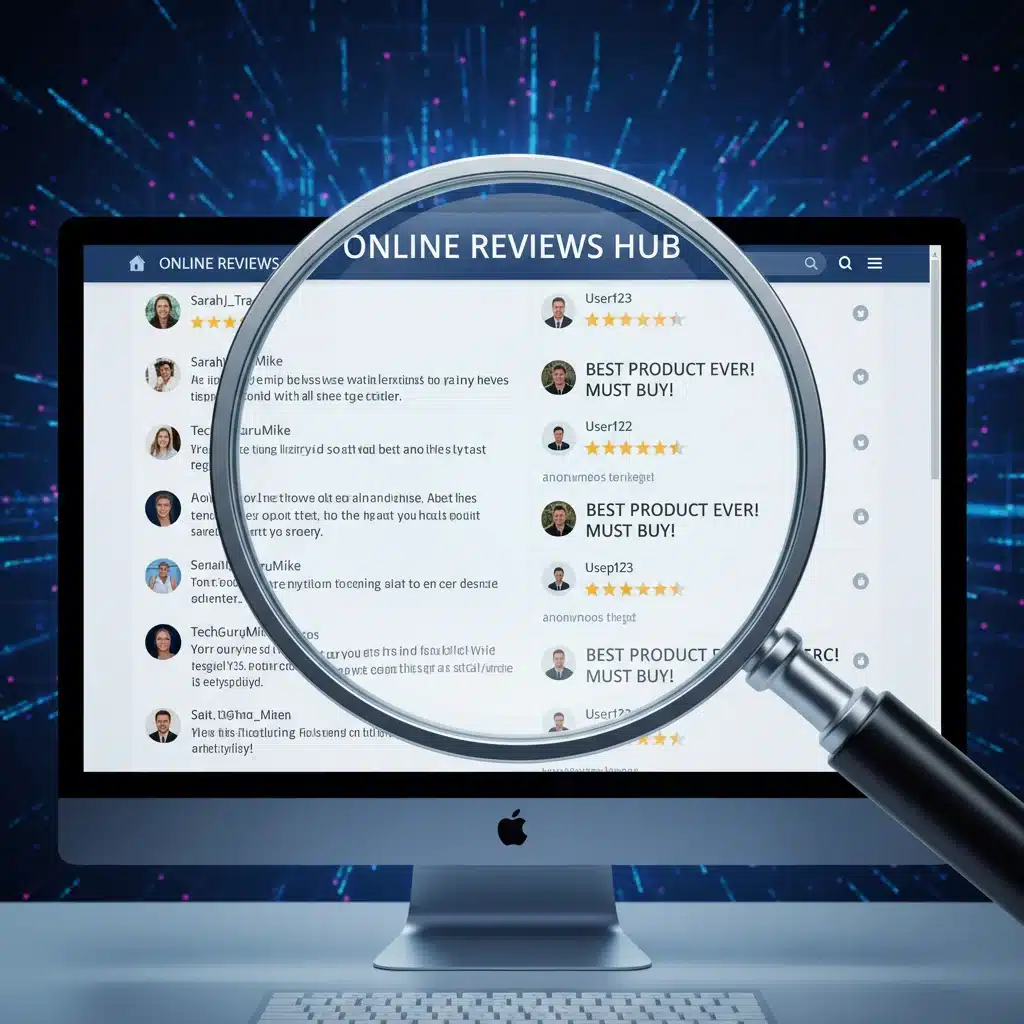
In today’s digital age, online reviews have become an indispensable tool for consumers. Before making a purchase, whether it’s a new gadget, a hotel stay, or even a restaurant meal, the first instinct for many is to check what others are saying. These digital endorsements or criticisms significantly influence buying decisions, shaping perceptions and guiding choices. The power of a positive review can propel a product or service to success, while a barrage of negative feedback can just as quickly lead to its downfall. This reliance on peer experiences has fostered a massive ecosystem of review platforms, from e-commerce giants like Amazon and eBay to specialized sites like TripAdvisor and Yelp.
However, with great influence comes great responsibility, and unfortunately, also great opportunity for manipulation. The proliferation of online reviews has led to a parallel rise in fake feedback. Companies, driven by the intense competition for consumer attention and sales, sometimes resort to unethical practices, including paying for positive reviews or commissioning negative ones for competitors. Individuals, too, might be incentivized to post misleading comments. This phenomenon of fake reviews undermines the very trust that consumers place in these platforms, making it increasingly difficult to discern genuine experiences from fabricated narratives. The challenge for the modern consumer is no longer just finding reviews, but accurately learning to detect fake reviews.
The impact of fake reviews extends beyond just misleading individual purchases. It distorts market competition, unfairly penalizes honest businesses, and erodes the overall credibility of online information. As consumers, we are left navigating a minefield of biased opinions, often without the tools to effectively distinguish truth from fiction. This article aims to equip you with those essential tools. We will delve into a comprehensive 5-step process designed to empower you to confidently detect fake reviews, ensuring your purchasing decisions are based on authentic feedback and not manipulated narratives. By mastering these strategies, you’ll not only make smarter buys but also contribute to a more transparent and trustworthy online marketplace.
Advertisements
Understanding the Landscape: Why Fake Reviews Exist
Before we dive into how to detect fake reviews, it’s crucial to understand the underlying motivations and mechanisms that drive their creation. The ‘why’ behind fake reviews is multifaceted, rooted in the intense pressures of the digital economy.
The Business Imperative: Boosting Sales and Reputation
For businesses, online reviews are a critical component of their marketing and sales strategy. A high star rating and numerous positive comments can significantly increase product visibility, click-through rates, and ultimately, conversions. In a crowded marketplace, even a slight edge can translate into substantial revenue gains. This intense pressure to perform often leads less scrupulous businesses to seek shortcuts, including purchasing fake positive reviews. These reviews are designed to create an illusion of popularity and quality, attracting unsuspecting customers who rely heavily on aggregated star ratings.
Undermining Competition: The Dark Side of Strategy
Conversely, fake reviews are also employed as a weapon against competitors. Businesses might pay for negative reviews targeting rival products or services. These malicious campaigns aim to tarnish a competitor’s reputation, drive down their ratings, and divert potential customers towards their own offerings. This unethical practice not only harms the targeted business but also further muddies the waters for consumers trying to make an informed choice.
The ‘Review Economy’: Who Creates Them and How
The creation of fake reviews has evolved into a sophisticated, albeit illicit, industry. There are several key players:
- Review Farms: These are organized operations, often based in countries with lower labor costs, where individuals are paid a small fee to write and post positive or negative reviews. They often use multiple accounts and IP addresses to avoid detection.
- Freelance Platforms: Websites connecting freelancers with clients can be exploited. Businesses post jobs for ‘product testers’ or ‘content creators’ who are then instructed to leave specific reviews after receiving a free product or a small payment.
- Bots and AI: With advancements in artificial intelligence, bots are increasingly being used to generate reviews. While still detectable to a trained eye, these AI-generated texts are becoming more sophisticated, mimicking human language patterns.
- Friends and Family: Less organized but still prevalent, some small businesses encourage friends, family, or even employees to leave glowing reviews, often without disclosing their relationship to the business.
Understanding these motivations and methods is the first step towards developing a critical eye. When you know what to look for and why it exists, you’re better equipped to detect fake reviews and protect yourself from manipulation.
The 5-Step Process to Detect Fake Reviews
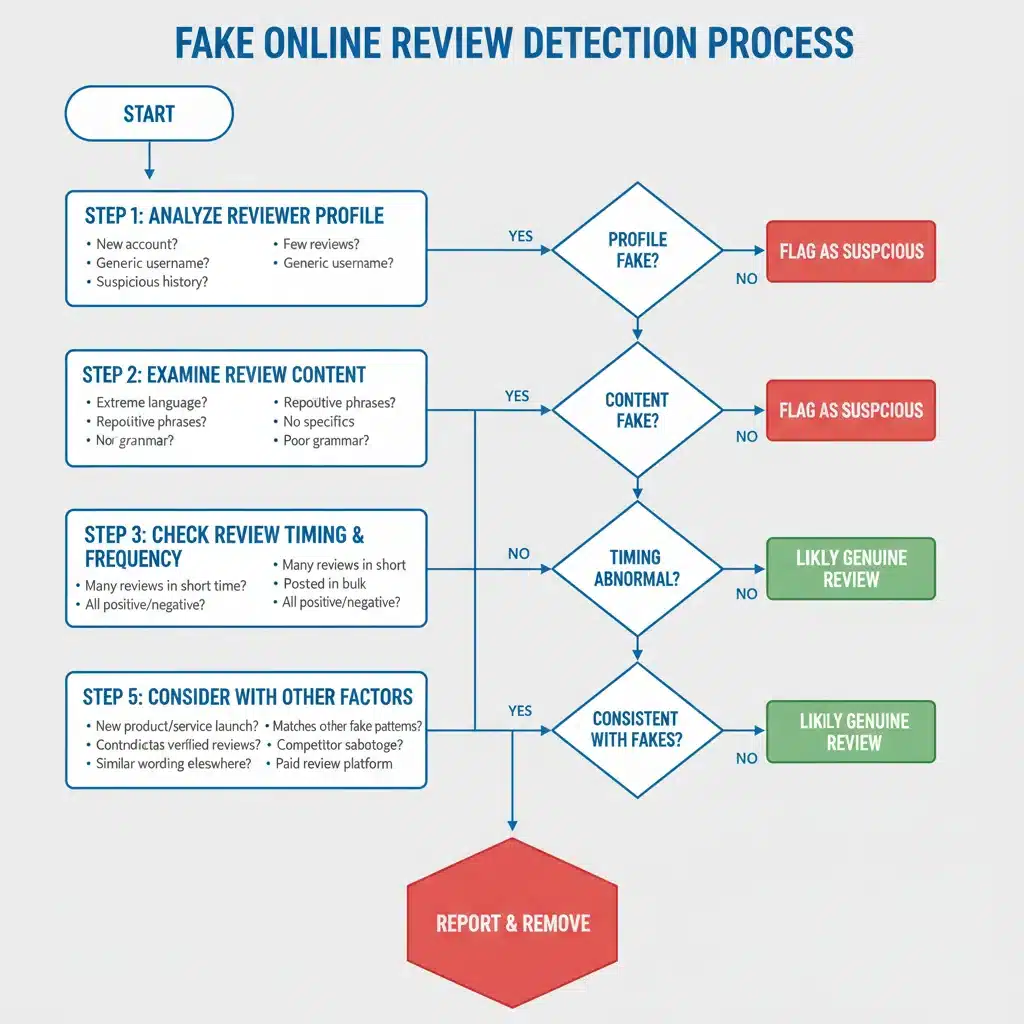
Navigating the vast sea of online feedback requires a systematic approach. Here’s a powerful 5-step process that will help you confidently detect fake reviews and make more informed decisions.
Step 1: Analyze the Reviewer’s Profile – The Digital Footprint
The first crucial step in identifying fake reviews is to examine the person behind the words. A genuine reviewer usually has a history, while a fake one often leaves a shallow digital footprint.
Look for Limited or Suspicious Activity:
- Few or Only One Review: A common red flag is a profile with only one review, especially if it’s an overwhelmingly positive (or negative) review for a single product. Real users typically review multiple items over time.
- Reviews for Disparate Products: If a reviewer has left glowing reviews for a diverse range of unrelated products (e.g., a car part, a baby stroller, and a high-end camera) all within a very short timeframe, it could indicate a fake profile.
- Lack of Profile Information: Many platforms allow users to create detailed profiles. A reviewer with no profile picture, no personal information, and a generic username should raise suspicion.
- Reviewer’s Name: Be wary of overly generic names or names that sound like they were generated by a bot (e.g., ‘User12345’, ‘ProductLoverX’).
Check Review Consistency and Patterns:
- Sudden Spikes in Activity: If a profile suddenly becomes very active, posting many reviews in a single day or week after a long period of inactivity, it might be a sign of a ‘review farm’ being activated.
- Similar Reviews Across Different Products/Platforms: Sometimes, fake reviewers copy-paste similar generic compliments or complaints across various products or even different review platforms.
- Unverified Purchase Tags: While not definitive, some platforms indicate ‘verified purchase.’ Reviews without this tag should be scrutinized more closely, as anyone can post an unverified review.
By scrutinizing the reviewer’s digital footprint, you can often identify patterns that suggest artificial activity, helping you to detect fake reviews before you even read the content.
Step 2: Scrutinize the Review Content – What Do the Words Say?
Once you’ve looked at the reviewer, it’s time to dissect the content of the review itself. Fake reviews often exhibit distinct linguistic and structural characteristics.
Examine Language and Tone:
- Overly Emotional or Exaggerated Language: Genuine reviews tend to be balanced, even if passionate. Fake reviews often use excessively positive or negative language, loaded with superlatives and exclamation points (e.g., ‘ABSOLUTELY AMAZING!’, ‘WORST PRODUCT EVER!!!’).
- Generic Phrases and Clichés: Watch out for vague, non-specific praise or criticism that could apply to almost any product (e.g., ‘Great product, highly recommend,’ ‘Terrible experience’). Real users usually mention specific features or aspects.
- Poor Grammar and Spelling: While not always a definitive sign, a consistent pattern of poor grammar, awkward phrasing, or unusual sentence structures can be a red flag, especially if it seems unnatural for a native speaker.
- Lack of Specific Details: Authentic reviews often include details about how the product was used, specific features that impressed or disappointed, or comparisons with previous products. Fake reviews tend to be short, general, and lack these concrete specifics.
- Repetitive Keywords: Some fake reviews are designed to boost SEO, so they might unnaturally repeat the product name or specific keywords multiple times within the text.
Look for Signs of Manipulation:
- Identical or Very Similar Wording: If you see multiple reviews with almost identical phrasing, it’s a strong indicator that they were copied and pasted or generated from a template.
- Focus on Irrelevant Details: Sometimes fake reviews will talk extensively about the packaging or shipping, rather than the actual product’s performance or features.
- Reviews Posted in Batches: A sudden influx of many similar-sounding reviews posted around the same time can suggest a coordinated effort to manipulate ratings.
- Disproportionate Length: While short reviews aren’t always fake, an unusually short review for a complex product, or an excessively long one filled with fluff, can be suspicious.
The words themselves are powerful clues. By paying close attention to the language, tone, and specific details (or lack thereof), you can significantly improve your ability to detect fake reviews.
Step 3: Evaluate the Overall Review Pattern – The Big Picture
Beyond individual reviews, the collective pattern of reviews for a product or service can reveal deeper insights into authenticity. This step involves looking at the aggregate data and trends.
Analyze the Distribution of Ratings:
- U-Shaped Distribution: A common pattern for products with fake reviews is a ‘U-shaped’ distribution, where there are many 5-star and 1-star reviews, but very few in the middle (2, 3, or 4 stars). This suggests deliberate attempts to boost or sabotage ratings, rather than a natural spread of opinions. Genuine products usually have a more bell-shaped curve, with a healthy mix of ratings.
- Lack of Middle Ground: If almost all reviews are either perfect or terrible, it’s a strong indicator of manipulation. Most products have pros and cons, leading to a natural range of feedback.
Look at the Timing and Velocity of Reviews:
- Sudden Spikes in Positive Reviews: A product that suddenly receives a large number of 5-star reviews in a very short period, especially shortly after its launch or a marketing campaign, should be viewed with skepticism. This often indicates a paid review campaign.
- Reviews Posted on Off-Hours: While not definitive, a pattern of reviews being posted at unusual times (e.g., consistently in the middle of the night in the target market’s time zone) can sometimes be a subtle clue.
- Inconsistent Review Dates: If a product has been on the market for a long time but only has reviews from the last few weeks or months, it could mean older, genuine reviews were removed or new fake ones were added.
Consider the Ratio of Positive to Negative Reviews:
- Too Good to Be True: A product with hundreds of reviews, all of which are 5-star, is highly suspicious. Even the best products typically have a few critical reviews.
- Overwhelming Negativity Without Specifics: Conversely, a product with an overwhelming number of 1-star reviews, all lacking specific complaints, might be a target of a smear campaign.
By stepping back and examining the overall review pattern, you gain a powerful perspective that helps to detect fake reviews that might otherwise blend in individually. This holistic view is crucial for a comprehensive assessment.
Step 4: Cross-Reference and External Verification – Looking Beyond the Platform
Don’t rely solely on one platform for your review analysis. A critical step in detecting fake reviews is to cross-reference information and seek external verification.
Check Multiple Review Platforms:
- Compare Ratings and Comments: If a product has wildly different average ratings or completely dissimilar types of comments across different major review sites (e.g., 4.5 stars on Amazon but 2 stars on Best Buy, or entirely different review content), it’s a significant red flag. This inconsistency can expose manipulated data on one platform.
- Look for Absence of Reviews: If a product is heavily reviewed on one platform but has virtually no presence or reviews on others, it could indicate a concentrated effort to boost its image on a single site.
Consult Independent Review Sites and Consumer Reports:
- Reputable Consumer Organizations: Websites like Consumer Reports, Wirecutter, or similar independent testing organizations provide unbiased, expert reviews. Their assessments can serve as a valuable benchmark.
- Tech Blogs and Industry Publications: For specific product categories, trusted tech blogs or industry publications often offer in-depth analyses that go beyond user reviews.
- Forums and Social Media: While these can also be prone to bias, searching for discussions about the product in relevant forums or social media groups can sometimes unearth genuine user experiences, both positive and negative, that aren’t visible on official review pages. Look for organic conversations rather than sponsored content.
Use Third-Party Review Analysis Tools:
- Fakespot, ReviewMeta, The Review Index: Several online tools specifically designed to detect fake reviews use algorithms to analyze review patterns, reviewer profiles, and language to provide a ‘fakeness’ score for products on major e-commerce sites. While not foolproof, they can offer a helpful initial assessment and highlight suspicious activity.
By expanding your research beyond a single source, you create a more robust verification process, making it much harder for fake reviews to mislead you. This cross-referencing is a powerful technique to detect fake reviews effectively.
Step 5: Trust Your Gut and Contextualize – The Human Element
After applying the analytical steps, the final crucial step involves integrating your findings with common sense and contextual awareness. Your intuition, informed by critical thinking, is a powerful tool to detect fake reviews.
Consider the Product/Service Itself:
- Is the Price Too Good to Be True? If a product boasts incredible features and overwhelmingly positive reviews but is priced significantly lower than comparable items, it should immediately raise a red flag. Fake reviews are often used to push low-quality or counterfeit goods.
- Does the Product Claim Miraculous Results? Be highly skeptical of products promising impossible or instant results (e.g., rapid weight loss, overnight anti-aging, instant wealth). Reviews for such products are often fabricated to exploit consumer desires.
- Does the Review Match the Product Category? A review for a complex electronic device that only praises its ‘nice color’ or ‘fast shipping’ without mentioning performance or features is suspicious. The level of detail should match the complexity of the item.
Read the Negative Reviews Carefully:
- Genuine Complaints: Real negative reviews often highlight specific flaws, design issues, or poor customer service experiences. These details are invaluable for understanding potential downsides.
- Constructive Criticism: Even negative reviews can be constructive, pointing out areas for improvement or specific use cases where the product might not be suitable.
- Beware of Trivial Complaints: While some genuine negative reviews might focus on minor issues, an excessive number of 1-star reviews for trivial, non-product-related matters (e.g., ‘delivery was late by one day’) can be a sign of a targeted attack.
Look for a Balance of Opinions:
- No Product is Perfect: Even the best products have some drawbacks or don’t suit everyone. A healthy mix of positive, neutral, and even some critical reviews (with specific, understandable complaints) is usually a sign of authenticity.
- Responses from the Seller/Manufacturer: How a seller responds to negative reviews can also be telling. A genuine seller will often try to address concerns or offer solutions, whereas a seller relying on fake reviews might ignore them or post overly defensive, generic responses.
Ultimately, while algorithms and data analysis are helpful, your informed judgment is paramount. By synthesizing all the information and trusting your critical thinking, you can effectively detect fake reviews and navigate the online marketplace with confidence. Remember, the goal is not just to find a product, but to find the right product based on honest feedback.
Practical Solutions and Best Practices for Smarter Buying
Now that you’re equipped with a robust 5-step process to detect fake reviews, let’s explore some practical solutions and best practices to integrate into your everyday shopping habits. These tips will not only help you avoid fraudulent feedback but also enhance your overall online purchasing experience.
Cultivate a Skeptical Mindset
The single most important tool you have is a healthy dose of skepticism. Don’t take any review at face value, especially for significant purchases. Approach each product page with the understanding that not all reviews are genuine. This doesn’t mean being cynical, but rather critical and analytical.
- Question Extremes: Be wary of reviews that are either excessively positive or overwhelmingly negative without specific, justifiable reasons.
- Look for Nuance: Genuine reviews often contain a mix of pros and cons, or specific scenarios where a product excels or falls short.
Prioritize Trusted Retailers and Brands
While fake reviews can appear anywhere, buying from reputable retailers and well-known brands can offer an additional layer of protection. These entities often have more stringent policies against review manipulation and invest more in customer satisfaction.
- Official Brand Websites: Purchasing directly from a brand’s official website can sometimes bypass third-party sellers who might be more prone to using fake reviews.
- Established Retailers: Large e-commerce platforms and brick-and-mortar stores with online presences (e.g., Amazon, Walmart, Target, Best Buy) often have sophisticated systems to detect and remove fake reviews, though they are not immune.
Utilize Review Analysis Tools (with caution)
Tools like Fakespot, ReviewMeta, and The Review Index can be valuable aids in your review detection process. They employ algorithms to scan for suspicious patterns that might indicate fake reviews.
- How They Work: These tools analyze reviewer history, language patterns, review velocity, and other factors to provide a ‘fakeness’ score or highlight suspicious reviews.
- Use as a Guide, Not a Definitive Answer: While helpful, these tools are not perfect. Use their findings as another data point in your analysis, rather than the sole determinant of a review’s authenticity. Always combine their insights with your own critical evaluation.
Read Beyond the First Page
Many consumers only skim the first few reviews. To get a more accurate picture, delve deeper.
- Scroll Through Pages: Often, fake reviews are clustered together. Scrolling through several pages of reviews can reveal patterns of repetition or sudden influxes of similar feedback.
- Filter by Rating: Read a selection of 5-star, 3-star, and 1-star reviews. This balanced approach helps you understand the full spectrum of user experiences.
- Filter by ‘Most Helpful’ or ‘Newest’: Changing the sort order can sometimes expose different patterns. ‘Most helpful’ reviews are often genuine, while ‘newest’ can highlight recent manipulation attempts.
Engage with the Community (if possible)
Some platforms allow users to ask questions directly to other reviewers or sellers. This can be an excellent way to get specific, personalized information.
- Ask Specific Questions: If you have doubts about a product’s feature or performance, ask a question. Genuine users are often happy to share their experiences.
- Look for Seller Responses: Observe how sellers respond to questions and negative feedback. A transparent and helpful seller is a good sign.
Understand the Limitations of Averages
A 4.5-star average rating might look impressive, but it doesn’t tell the whole story. Always look at the distribution of ratings (Step 3). A product with many 5-star and 1-star reviews averaging out to 4.5 is far more suspicious than one with a consistent spread around 4.5 stars.
Report Suspicious Reviews
If you strongly suspect a review is fake, most platforms offer a way to report it. By doing so, you contribute to a cleaner, more trustworthy online environment for everyone.
By adopting these practical solutions and best practices, you’ll not only be better equipped to detect fake reviews but also become a more discerning and confident online shopper. This proactive approach ensures your hard-earned money is spent on products and services that truly meet your expectations, based on authentic feedback.
The Long-Term Impact of Detecting Fake Reviews
The ability to effectively detect fake reviews is more than just a personal skill for smarter shopping; it has far-reaching implications for the entire digital ecosystem. Understanding this broader impact underscores the importance of cultivating your critical review analysis skills.
Empowering Consumers and Building Trust
When consumers can reliably distinguish between genuine and fake feedback, they become empowered. They can make purchasing decisions with greater confidence, knowing that their choices are based on honest experiences rather than manipulated narratives. This empowerment rebuilds the trust that has been eroded by review fraud. As more consumers become adept at spotting fakes, the overall quality and reliability of online review platforms will naturally improve, fostering a healthier environment for informed decision-making.
Promoting Fair Competition and Ethical Business Practices
The prevalence of fake reviews creates an unfair playing field. Ethical businesses that invest in quality products and genuine customer service can be overshadowed by competitors who resort to review manipulation. When consumers can detect fake reviews, it reduces the effectiveness of these unethical tactics. This, in turn, incentivizes businesses to compete on merit – product quality, customer service, and innovation – rather than on fabricated online reputations. Over time, this shift can lead to a more equitable and ethical marketplace where genuine value is rewarded.
Holding Platforms Accountable
The major review platforms (Amazon, Google, Yelp, TripAdvisor, etc.) have a significant responsibility to maintain the integrity of their review systems. As consumers become more vocal and adept at identifying fake reviews, it puts greater pressure on these platforms to invest in more sophisticated detection algorithms, implement stricter policies, and act more decisively against offenders. Consumer vigilance can drive platform accountability, leading to continuous improvements in their systems for identifying and removing fraudulent content.
Shaping the Future of E-commerce
E-commerce continues to grow exponentially, and online reviews remain a cornerstone of this growth. The long-term health of this industry depends on the credibility of the information available to consumers. A marketplace riddled with untrustworthy reviews will eventually lose consumer confidence, stifling innovation and growth. By actively working to detect fake reviews, consumers are contributing to the evolution of a more transparent and reliable online shopping experience for everyone. This collective effort ensures that reviews remain a valuable resource, truly reflecting consumer sentiment and guiding purchasing decisions in a meaningful way.
Protecting Your Wallet and Your Well-being
On a personal level, the most immediate and tangible impact is protecting your finances and avoiding disappointment. Purchasing a low-quality product based on fake glowing reviews wastes money and can lead to frustration. For services like healthcare or childcare, where reviews can heavily influence critical decisions, the ability to discern genuine feedback is paramount to your well-being and safety. By mastering the art of detecting fake reviews, you safeguard your resources and ensure that your choices align with your best interests.
In conclusion, your journey to becoming a savvy online consumer, capable of discerning authentic feedback from fabricated narratives, extends far beyond individual purchases. It’s a contribution to a more honest, transparent, and trustworthy digital world. By applying the 5-step process and adopting best practices, you’re not just making smarter buys; you’re actively shaping a better future for e-commerce and consumer trust.
Conclusion: Becoming a Savvy Review Detective
In an increasingly digital world, the ability to critically evaluate online information is no longer a luxury but a necessity. Online reviews, while incredibly useful, have become a battleground where genuine consumer experiences clash with orchestrated deception. The challenge to detect fake reviews is real, but it is a challenge that, with the right tools and mindset, you can definitively overcome.
We’ve embarked on a journey through a comprehensive 5-step process, designed to transform you into a discerning review detective. From scrutinizing the often-sparse digital footprints of reviewers and dissecting the tell-tale linguistic patterns within review content, to analyzing the broader statistical distributions and cross-referencing information across multiple platforms, each step builds upon the last. Finally, we emphasized the invaluable role of your own critical judgment and contextual awareness – trusting your gut when something seems ‘too good to be true’ or ‘too bad to be real’.
Remember, the goal is not to dismiss all online reviews but to approach them with an informed skepticism. Genuine reviews, born from real experiences, remain an incredibly powerful resource, offering insights that traditional advertising simply cannot. By diligently applying the techniques outlined in this guide, you empower yourself to filter out the noise and focus on the authentic voices that truly matter.
Embrace these practical solutions and best practices as you navigate your next online purchase. Make it a habit to look beyond the star rating, to question the extremes, and to seek out specific, verifiable details. Your commitment to identifying fake feedback will not only lead to smarter, more satisfying purchases for yourself but will also contribute to a larger movement towards a more transparent and trustworthy online marketplace for everyone.
The digital landscape is constantly evolving, and so too will the methods of those attempting to manipulate reviews. However, by staying vigilant, continuously refining your critical thinking skills, and utilizing the robust framework provided, you will always be one step ahead. Go forth, shop wisely, and let your informed decisions pave the way for a more honest online world.