Decoding Return Policies: 6 Critical Questions Before Every Major US Purchase

In the vibrant and often overwhelming world of American retail, making a significant purchase can be an exciting, yet sometimes daunting, experience. From a new appliance for your home to that high-tech gadget you’ve been eyeing, or even a vehicle, these investments come with expectations. But what happens when those expectations aren’t met? This is where understanding US Return Policies becomes not just important, but absolutely critical. Many consumers overlook the fine print, assuming a universal safety net, only to face disappointment when a return or exchange is denied.
The truth is, return policies in the United States are far from standardized. They vary wildly from state to state, store to store, and even product to product within the same retailer. This lack of uniformity can lead to significant frustration, financial loss, and a sense of helplessness if you’re not prepared. Our aim with this comprehensive guide is to equip you with the knowledge and actionable strategies to navigate these complexities. We will delve into the six critical questions you must ask before making any major purchase, ensuring you are always on the front foot, informed, and empowered.
Think of this as your essential pre-purchase checklist, designed to protect your hard-earned money and give you peace of mind. By proactively addressing these questions, you can avoid common pitfalls, understand your consumer rights, and make smarter purchasing decisions. Let’s embark on this journey to decode the often-mysterious world of US Return Policies.
Advertisements
The Landscape of US Return Policies: Why They Matter So Much
Before diving into the specific questions, it’s crucial to grasp why understanding US Return Policies is paramount. Unlike some other countries, there is no federal law in the United States that mandates retailers to accept returns. This means that, for the most part, businesses have the autonomy to set their own terms and conditions for returns, exchanges, and refunds. While many reputable retailers offer generous return windows as a competitive advantage and a sign of good customer service, this is a courtesy, not a legal obligation (with a few exceptions related to defective products or misrepresentation).
This autonomy leads to a patchwork of policies that can range from ‘no questions asked’ within 90 days to ‘all sales final’ on certain items. For major purchases, the stakes are significantly higher. A small item, if non-returnable, might be an inconvenience. A non-returnable large appliance, electronic device, or piece of furniture can represent a substantial financial loss and a lingering source of regret. Moreover, the nuances within these policies – such as restocking fees, return windows, condition requirements, and proof of purchase mandates – can be easily overlooked, leading to unpleasant surprises.
By understanding and actively questioning these policies, you transform from a passive buyer into an informed consumer. This proactive approach not only protects your financial interests but also enhances your overall shopping experience, reducing stress and increasing satisfaction. Let’s now explore the six indispensable questions that will guide you through this process.
Question 1: What is the Exact Return Window?
This might seem like an obvious question, but its importance cannot be overstated, especially for major purchases. The return window specifies the period within which you can return an item for a refund or exchange. This period can vary significantly: some retailers offer a mere 14 days, others a generous 90 days, and a select few even provide a full year. For major purchases like electronics, appliances, or furniture, a shorter window can be particularly restrictive.
When asking about the return window, be precise. Don’t just ask, “How long do I have to return this?” Instead, inquire:
- “What is the exact number of days I have to return this [specific item] for a full refund?”
- “Does the return window start from the date of purchase or the date of delivery?” (Crucial for online orders or items with delayed delivery).
- “Are there different return windows for different types of products, even within the same store? For example, is the policy for a TV different from a refrigerator?”
- “Are there extended return windows during holiday seasons, and if so, how do they apply to this purchase?”
A common mistake is assuming that all items from a particular store have the same return period. Often, electronics might have a shorter window than clothing, or clearance items might be final sale. Always confirm for the specific item you are considering. Note down the exact date by which you must return the item, perhaps even setting a reminder on your phone. This simple step can save you from missing the deadline and being stuck with an unwanted product.
Question 2: What Condition Must the Item Be In?
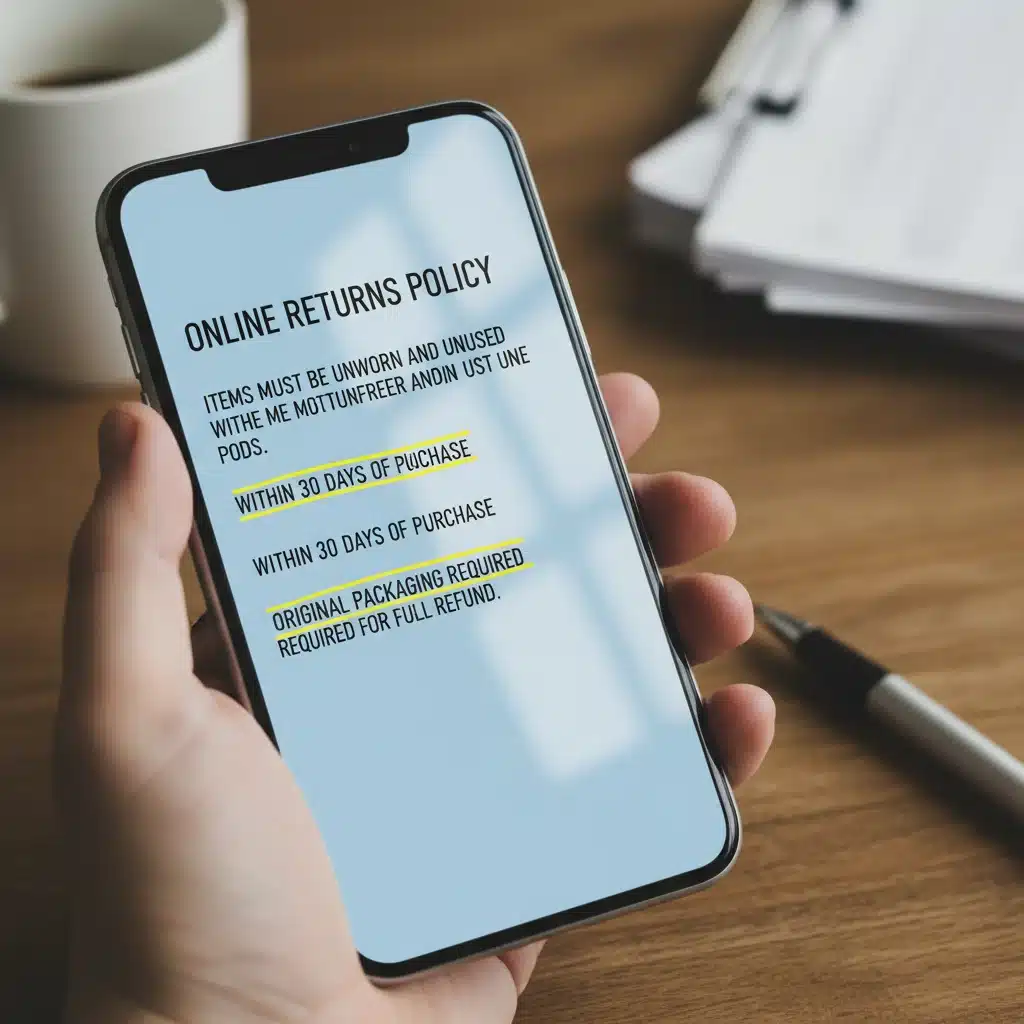
The condition of the returned item is another critical aspect of US Return Policies that often catches consumers off guard. Retailers typically expect items to be returned in a resalable condition, but the definition of ‘resalable’ can vary. For some, it means ‘unused and in original packaging,’ while for others, ‘lightly used’ might be acceptable, especially for items like clothing or home goods where trying them out is expected.
When discussing this, ask:
- “Does the item need to be in its original, unopened packaging?” (Very common for electronics, software, and health/beauty products).
- “Can I open and test the product, or does it need to remain sealed for a return?”
- “What happens if I’ve used the item briefly but it doesn’t meet my expectations? Is it still eligible for a full refund?”
- “Are all original accessories, manuals, and components required for the return?”
- “What is considered ‘damage’ that would void a return?”
Be particularly wary of products that come with tamper-evident seals or one-time activation codes, as opening or activating them might immediately void your return options. For larger items like furniture or appliances, ensure you understand how they expect the item to be packaged for return if you’ve already unboxed and assembled it. Some retailers might even require professional re-packaging, which could incur additional costs. Clarity here prevents disputes over the item’s condition upon return.
Question 3: Is a Receipt or Proof of Purchase Absolutely Necessary?
While it might seem like common sense to keep your receipt, life happens, and receipts can get lost, damaged, or simply forgotten. Many US Return Policies strictly adhere to the ‘no receipt, no return’ rule. However, some retailers offer alternatives, especially if you’re a loyalty program member or if the purchase was made with a credit card that can be traced.
Ask these specific questions:
- “Do I absolutely need the original physical receipt for a return, or can a digital receipt or credit card statement suffice?”
- “If I lose my receipt, can my purchase be looked up using my loyalty program membership or the credit card I used?”
- “What if the item was a gift and I don’t have the original receipt? Are there options for store credit or exchange?”
- “Are there any exceptions to the receipt rule for defective merchandise?”
For major purchases, it’s always best practice to keep both a physical and digital copy of your receipt. Take a photo of it, email it to yourself, or store it in a dedicated folder. If the retailer offers to email you the receipt, always opt for that. This redundancy ensures you have proof of purchase, even if the paper copy fades or gets misplaced. Without proper proof, even the most generous return policy can become useless.
Question 4: Are There Any Restocking Fees or Other Charges?
This is a critical question that can significantly impact your potential refund. Some retailers, particularly for electronics, furniture, or large appliances, levy restocking fees for returned items. These fees are typically a percentage of the item’s purchase price (e.g., 15-25%) and are intended to cover the cost of inspecting, repackaging, and re-shelving the product. For a major purchase, a restocking fee can amount to a substantial sum, turning a full refund into a partial one.
When inquiring, be direct:
- “Are there any restocking fees associated with returning this [specific item], and if so, what is the percentage or amount?”
- “Do restocking fees apply if the item is unopened or still in its original packaging?”
- “Are shipping costs refundable, or will I be responsible for return shipping?” (Especially relevant for online purchases).
- “Are there any other potential charges or deductions from my refund that I should be aware of?”
Understanding these potential costs upfront can influence your purchasing decision. If a significant restocking fee applies, you might reconsider your purchase or explore alternatives with more lenient US Return Policies. Always factor these potential costs into your budget and decision-making process. For online purchases, clarify who bears the cost of return shipping, as this can sometimes be as expensive as the restocking fee itself.
Question 5: How Will I Receive My Refund?
The method and timing of your refund are important details that can affect your financial planning. While a full refund to your original payment method is often the expectation, not all retailers operate this way, especially if certain conditions aren’t met. Some might offer store credit, gift cards, or a check, which might not be as convenient as a direct refund to your credit card or bank account.
Ask these clarifying questions:
- “If I return this item, will I receive a full refund to my original payment method (e.g., credit card, debit card, cash)?”
- “How long does it typically take for a refund to process and appear back on my statement?”
- “Under what circumstances would I receive store credit or a gift card instead of a monetary refund?” (Often applies to gift returns without a receipt).
- “If I paid with a gift card, will the refund be issued back to a gift card?”
For large purchases, waiting weeks for a refund can be inconvenient. Knowing the expected timeline helps manage your finances. If a retailer offers only store credit, consider whether that’s an acceptable outcome for you, or if you’d prefer to shop elsewhere with a more straightforward refund policy. Always confirm the refund method before completing the transaction, especially if you anticipate a potential return.

Question 6: Are There Any Exceptions or Final Sale Items?
This question serves as a crucial catch-all to uncover any hidden clauses or specific item exclusions that could override the general US Return Policies. Many stores have categories of items that are explicitly non-returnable, often for hygiene reasons, intellectual property concerns, or due to their nature (e.g., personalized items, perishable goods, or final clearance sales).
Be sure to ask:
- “Are there any specific items or categories within the store that are considered ‘final sale’ and cannot be returned under any circumstances?”
- “Does this particular [specific item] fall into any exclusion categories for returns?”
- “Are there any conditions under which a return would be absolutely denied, even if all other criteria are met?” (e.g., opened software, installed appliances).
- “What is the policy for defective items? Does it differ from a standard return?”
This is where you might discover that custom-ordered furniture, opened mattress protectors, or even certain high-value electronics are non-returnable once opened or used. Always check product descriptions carefully for ‘final sale’ or ‘non-returnable’ disclaimers, especially when shopping online. A verbal confirmation from a sales associate can also provide peace of mind, though it’s always best to have it in writing or refer to the official policy.
Practical Solutions and Best Practices for Navigating US Return Policies
Beyond asking these six critical questions, adopting a few best practices can further safeguard your purchases and streamline the return process should it become necessary. These tips are designed to empower you as a consumer and make navigating US Return Policies a much smoother experience.
Document Everything
Keep meticulous records of your purchases. This includes not just the physical receipt, but also digital copies, email confirmations, and any written or verbal assurances from sales associates regarding return policies. If you have a conversation with a store representative about the return policy, make a note of their name, the date, and what was discussed. This documentation can be invaluable if a dispute arises.
Read the Fine Print (Online and In-Store)
Never assume. Always take the time to read the full return policy, whether it’s posted prominently in the store, printed on the back of your receipt, or detailed on the retailer’s website. Pay special attention to sections on major purchases, electronics, or the specific category of item you are buying. Online retailers often have dedicated FAQ sections for returns that offer more detail.
Understand State-Specific Consumer Protections
While there’s no federal law mandating returns, some states have specific consumer protection laws that might offer additional rights, especially concerning defective merchandise or unfair business practices. For instance, laws related to implied warranties of merchantability mean that a product should be fit for its ordinary purpose, regardless of a store’s ‘all sales final’ policy. Familiarize yourself with your state’s consumer protection laws, particularly for high-value items.
Consider Purchase Protection from Credit Cards
Many credit cards offer purchase protection benefits, including extended warranties, price protection, and even return protection. Return protection can be a lifesaver if a retailer denies a return on an eligible item within a certain timeframe. Check with your credit card issuer to understand what benefits are available to you for major purchases. This can act as an additional layer of security beyond the retailer’s own US Return Policies.
Act Promptly
If you realize you need to return an item, do not delay. The sooner you initiate the return process, the less likely you are to encounter issues related to exceeding the return window, product wear and tear, or lost documentation. Even if you’re within the policy’s timeframe, acting quickly demonstrates good faith and can prevent complications.
Communicate Clearly and Respectfully
When making a return, be clear about your request and have all your documentation ready. While frustrations can run high, maintaining a respectful and calm demeanor can often lead to a more positive outcome. Understand that customer service representatives are following established policies, and a calm approach can facilitate a smoother resolution.
Conclusion: Empowering Your Purchases with Knowledge
Navigating the diverse landscape of US Return Policies doesn’t have to be a source of anxiety. By asking these six critical questions and adopting the recommended best practices, you transform yourself into an informed and empowered consumer. No longer will you be caught off guard by unexpected fees, strict deadlines, or non-returnable items. Instead, you’ll approach every major purchase with confidence, knowing exactly what to expect and what your options are.
Remember, an ounce of prevention is worth a pound of cure. A few minutes spent clarifying return policies before you buy can save you hours of frustration and potentially hundreds or even thousands of dollars in the long run. Make it a habit to inquire, document, and understand, and you’ll ensure that your major purchases bring lasting satisfaction, not regret. Happy and informed shopping!