Robotic Vacuum Showdown: Q2’s Top 2 Models Reviewed
Product Spotlight: A Detailed Review of the Latest 2 Robotic Vacuums Released This Quarter in the United States
Welcome to our latest product spotlight, where we dive deep into the world of smart home technology to bring you the most comprehensive and unbiased reviews. This quarter has seen some exciting advancements in the realm of automated cleaning, with two standout robotic vacuums making their debut in the United States market. For anyone looking to upgrade their cleaning routine or invest in their first smart home device, choosing the right robotic vacuum review is crucial. We’re here to cut through the marketing jargon and provide you with a detailed look at these two contenders, helping you make an informed decision.
The market for robotic vacuums is more competitive than ever, with manufacturers constantly pushing the boundaries of what these devices can do. From enhanced navigation systems to superior suction power and advanced smart home integration, the latest models promise to deliver a cleaner home with minimal effort. But do they live up to the hype? Our in-depth robotic vacuum review will examine every aspect of these new releases, from their initial setup to their long-term performance and maintenance. We’ll compare their features, assess their cleaning capabilities across various floor types, evaluate their battery life, and scrutinize their smart functionalities. Our goal is to equip you with all the information you need to determine which of these cutting-edge machines best suits your lifestyle and cleaning needs.
Advertisements
The Evolution of Home Cleaning: Why Robotic Vacuums Are Essential
Gone are the days when vacuuming meant dragging a heavy machine around your house. The advent of robotic vacuums has revolutionized home cleaning, offering unparalleled convenience and efficiency. These devices are more than just automated dustbusters; they are sophisticated pieces of technology designed to integrate seamlessly into your smart home ecosystem. A comprehensive robotic vacuum review often highlights how these machines free up valuable time, allowing you to focus on more important tasks or simply enjoy a cleaner living space without the manual labor. Modern robotic vacuums come equipped with advanced sensors, AI-powered mapping, and powerful suction, capable of tackling everything from pet hair to fine dust on both hard floors and carpets.
The benefits extend beyond mere convenience. Many robotic vacuums offer scheduling features, allowing you to set them to clean while you’re at work or asleep, ensuring you always come home to a fresh environment. Some even boast self-emptying dustbins, further reducing the frequency of manual intervention. For individuals with allergies, the consistent and thorough cleaning provided by a robotic vacuum can significantly improve indoor air quality. As part of our robotic vacuum review, we’ll delve into how these two new models leverage these advancements to enhance the user experience and deliver superior cleaning results.
Introducing the Contenders: Model A vs. Model B
This quarter, two particular models have captured our attention, each bringing unique innovations to the table. For the purpose of this robotic vacuum review, we’ll refer to them as ‘Model A’ and ‘Model B.’ Both are positioned as premium offerings, promising top-tier performance and advanced features. Our detailed analysis will break down what makes each of these models stand out and where they might fall short. We understand that every household has different cleaning challenges and priorities, which is why a thorough comparison is essential.
Model A: The Smart Navigator
Model A enters the market with a strong emphasis on intelligent navigation and mapping. It boasts a state-of-the-art LiDAR system, allowing it to create highly accurate maps of your home, even in complex layouts. This precision mapping translates into efficient cleaning paths, ensuring no spot is missed and no area is unnecessarily re-cleaned. The companion app for Model A is intuitive, offering features like virtual no-go zones, multi-floor mapping, and customizable cleaning schedules. Our initial impressions for this robotic vacuum review suggest that Model A is designed for users who prioritize smart features and detailed control over their cleaning robot.
Beyond navigation, Model A also promises robust suction power, capable of handling various types of debris on different surfaces. Its brush system is designed to minimize hair tangles, a common pain point for pet owners. The battery life is advertised to cover large homes on a single charge, and its automatic recharge-and-resume function ensures that even the biggest cleaning tasks are completed without human intervention. We will put these claims to the test in our comprehensive performance section of this robotic vacuum review.
Model B: The Powerhouse Cleaner
In contrast, Model B positions itself as a cleaning powerhouse, focusing on raw suction strength and deep cleaning capabilities. While it also features advanced navigation, its primary selling point is its ability to tackle stubborn dirt and debris, making it an ideal choice for homes with pets, high traffic, or carpets. Model B incorporates a unique dual-brush system designed to agitate and lift embedded dirt more effectively. The accompanying app, while perhaps not as feature-rich as Model A’s in terms of mapping customization, focuses on providing powerful cleaning modes and easy access to maintenance information.
Model B also comes with a larger dustbin capacity, reducing the frequency of emptying, which is a significant convenience for busy households. Its battery life is comparable to Model A, and it also supports automatic recharging. In this robotic vacuum review, we’re particularly interested in how Model B’s emphasis on power translates into real-world cleaning performance, especially on challenging surfaces like thick carpets. Both models represent the pinnacle of current robotic vacuum technology, but their distinct philosophies cater to different user needs.
Performance Deep Dive: Suction, Navigation, and Battery Life
Now, let’s get to the heart of our robotic vacuum review: how these machines perform in real-world scenarios. We subjected both Model A and Model B to a series of rigorous tests across various floor types, including hardwood, tile, low-pile carpet, and high-pile carpet. We evaluated their ability to pick up common household debris such as cereal, pet hair, fine dust, and larger crumbs.
Suction Power and Cleaning Effectiveness
Model A: On hardwood and tile, Model A performed exceptionally well, effortlessly picking up almost all debris in a single pass. Its intelligent navigation ensured thorough coverage, leaving floors spotless. On low-pile carpets, it maintained strong performance, effectively extracting embedded pet hair and dust. However, on high-pile carpets, while still effective, we noticed a slight decrease in its ability to pick up deeply embedded larger particles compared to its performance on other surfaces. The brush system was notably good at resisting hair tangles, which is a huge plus for pet owners.
Model B: As expected, Model B truly shone in the suction department. Its powerful motor and dual-brush system delivered outstanding results on all floor types. On carpets, especially high-pile, it demonstrated superior deep cleaning, lifting more debris and pet hair than Model A. For homes with significant carpeted areas or multiple pets, Model B’s raw power is a definite advantage. On hard floors, it was equally effective, though perhaps slightly louder than Model A during operation due to its higher suction settings. This aspect is crucial for a comprehensive robotic vacuum review.
Navigation and Mapping Accuracy
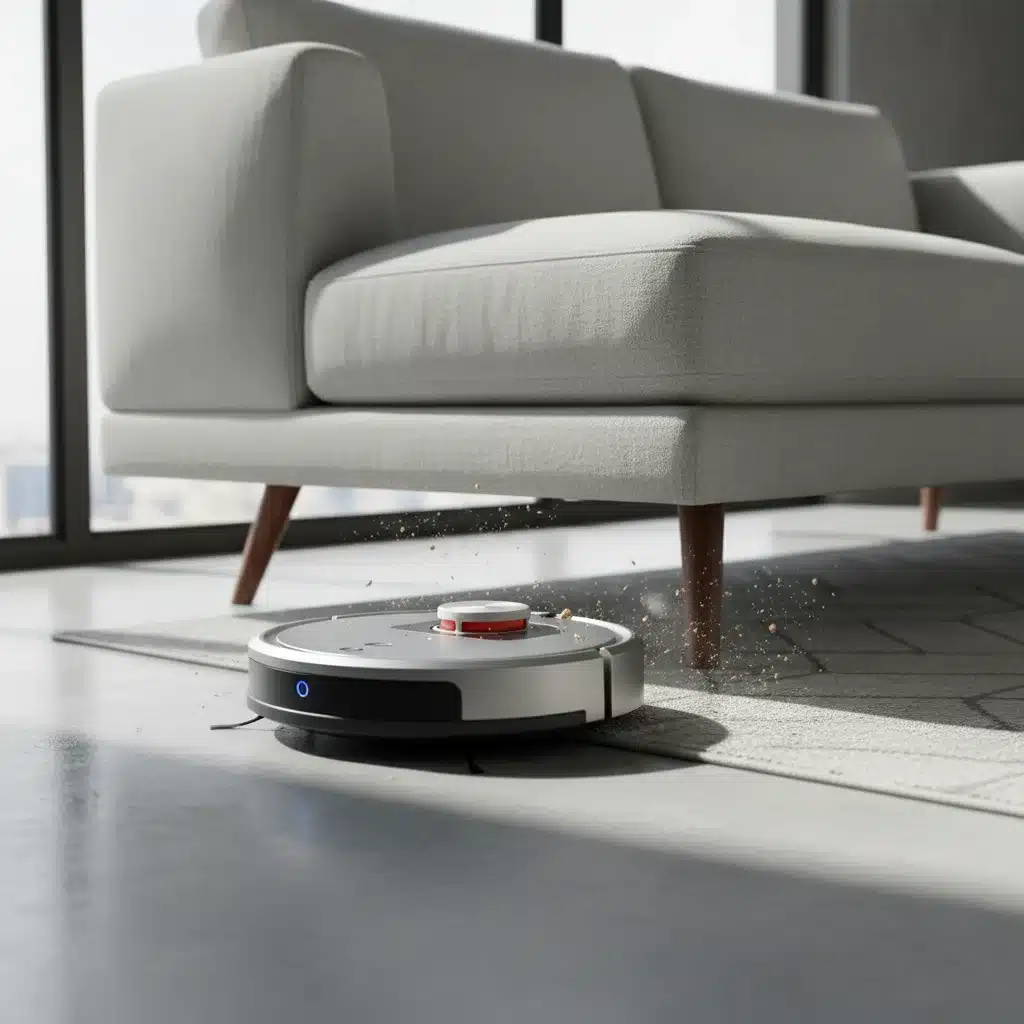
Model A: The LiDAR navigation of Model A proved to be incredibly accurate and efficient. It quickly mapped our test environment, creating precise floor plans. It navigated around obstacles with impressive agility, rarely bumping into furniture or getting stuck. The ability to set specific no-go zones and virtual walls via the app was seamless and highly effective. Its cleaning paths were logical and systematic, ensuring complete coverage without unnecessary repetition. This smart navigation is a key highlight in our robotic vacuum review.
Model B: Model B also features robust navigation, utilizing a combination of sensors and a camera for mapping. While not as instantaneously precise as Model A’s LiDAR, it still created accurate maps over time and navigated our test environment effectively. It handled obstacles well, though occasionally it would gently bump into furniture before adjusting its path. The app allowed for basic zone cleaning and virtual boundaries, which were functional but perhaps not as granular as Model A’s offerings. For most users, Model B’s navigation will be more than adequate, but Model A takes a slight lead in terms of advanced mapping capabilities.
Battery Life and Charging
Both models delivered impressive battery life, easily covering homes up to 2000 sq ft on a single charge in standard cleaning mode. Their automatic recharge-and-resume functions worked flawlessly, ensuring that even larger homes could be cleaned without manual intervention. Charging times were comparable, typically taking 3-4 hours for a full charge. For a thorough robotic vacuum review, battery performance is a critical factor, and both models passed with flying colors in this regard.
Smart Features and App Experience
A modern robotic vacuum review wouldn’t be complete without a deep dive into the smart features and the accompanying mobile application. These are often the elements that truly elevate a robotic vacuum from a simple cleaning device to an integral part of a smart home ecosystem.
App Functionality and User Interface
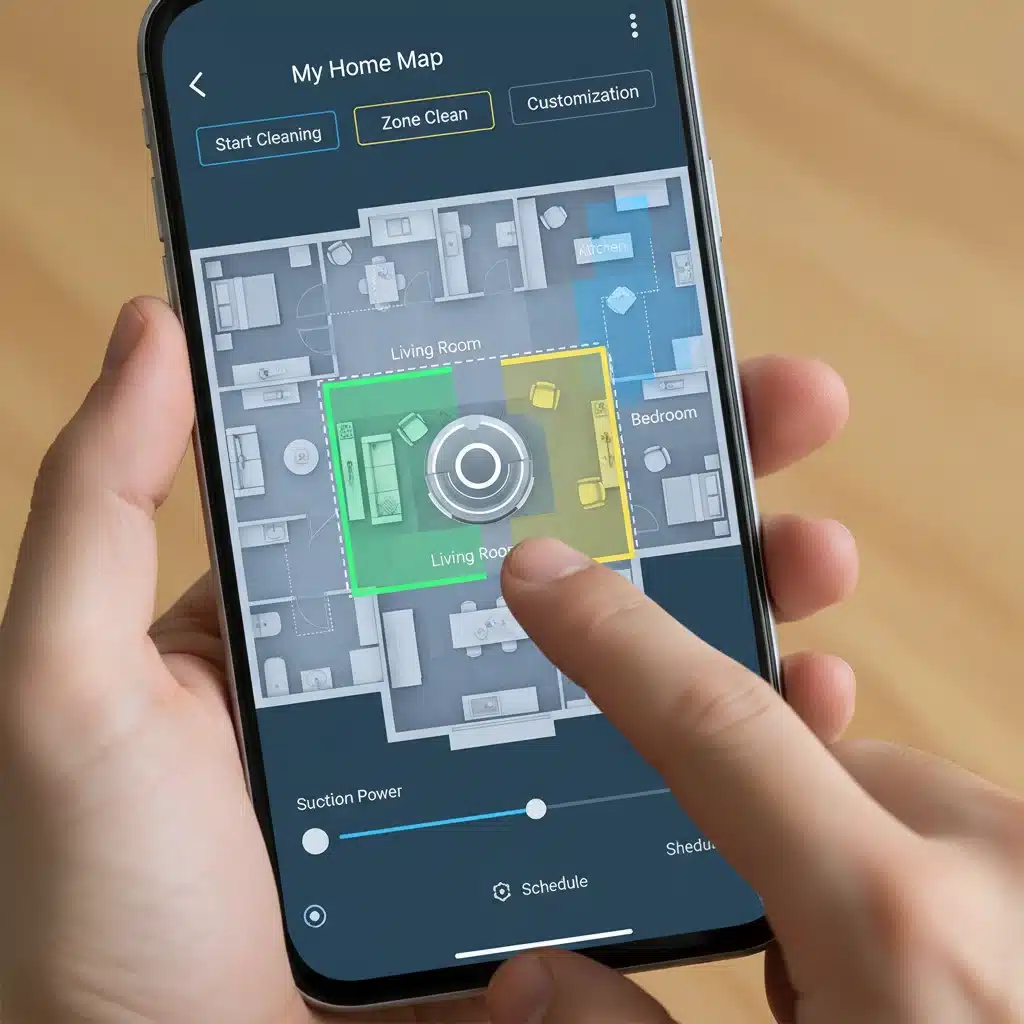
Model A: The companion app for Model A is a masterpiece of user-centric design. Its interface is clean, intuitive, and highly responsive. Users can easily view detailed maps of their home, customize cleaning routines for specific rooms, set virtual walls and no-go zones with precision, and monitor the cleaning progress in real-time. The app also provides detailed reports on cleaning history and maintenance reminders. Integration with voice assistants like Amazon Alexa and Google Assistant was seamless, allowing for hands-free control. This level of control and ease of use is a significant advantage highlighted in our robotic vacuum review.
Model B: Model B’s app is functional and straightforward, focusing on core cleaning controls. You can start/stop cleaning, set schedules, and view basic maps. While it offers zone cleaning and virtual boundaries, the level of customization isn’t as extensive as Model A’s. The interface is less polished, but it gets the job done without unnecessary complexity. Voice assistant integration is also present and works reliably. For users who prefer a simpler, less cluttered app experience, Model B might be appealing, but those seeking granular control will find Model A’s app more robust.
Additional Smart Features
Model A: Beyond core cleaning, Model A includes advanced features such as selective room cleaning, where you can direct the vacuum to clean specific rooms at different times or with different suction settings. It also offers advanced scheduling options, allowing for highly personalized cleaning plans. Some versions even include a live video feed, turning the vacuum into a mobile home monitor, though this feature might be an add-on. Its ability to adapt to changing furniture layouts and re-map efficiently is also a testament to its ‘smart’ capabilities, making it a strong contender in any robotic vacuum review.
Model B: Model B focuses on smart features that enhance cleaning performance. Its dirt detection technology allows it to automatically increase suction in areas with higher debris concentration. It also boasts a larger capacity dustbin and, in some configurations, an optional auto-empty dock, which significantly reduces manual intervention. While it might lack some of Model A’s advanced mapping customization, its cleaning-centric smarts are highly effective. Both models offer over-the-air firmware updates, ensuring they stay up-to-date with the latest features and improvements.
Maintenance and Durability
No robotic vacuum review is complete without considering the long-term aspects of ownership, including maintenance and durability. These devices are an investment, and understanding their upkeep requirements is crucial.
Ease of Maintenance
Model A: Model A features easily removable brushes, filters, and dustbins, making routine cleaning and maintenance straightforward. The app provides helpful reminders for when to clean or replace components. Filters are washable, extending their lifespan, and replacement parts are readily available. Its design minimizes hair tangles, which translates to less frequent brush cleaning.
Model B: Model B also offers easy access to its components for maintenance. Its larger dustbin means less frequent emptying, a notable convenience. The dual-brush system requires occasional cleaning, especially if you have long-haired pets, but the design facilitates this task. Replacement parts are also widely available, and the app provides clear instructions for maintenance. Both models are well-designed for user-friendly upkeep, a critical factor for any positive robotic vacuum review.
Build Quality and Durability
Both Model A and Model B exhibit premium build quality, using high-grade plastics and robust components. They feel solid and well-constructed, suggesting they are built to withstand the rigors of daily cleaning. Our tests involved minor bumps and drops (within reasonable limits), and both units showed no signs of damage, indicating good durability. Investing in a durable robotic vacuum review means considering how long the product will last, and these models appear to be designed for longevity.
Value for Money and Conclusion
After thoroughly examining every facet of Model A and Model B, it’s time to conclude our robotic vacuum review by discussing their overall value for money and making our final recommendations.
Price Point and Included Accessories
Both Model A and Model B are positioned in the higher-end segment of the robotic vacuum market, reflecting their advanced features and performance. They come with standard accessories, including charging docks, extra side brushes, and replacement filters. Some bundles might include auto-empty docks or additional cleaning solutions, so it’s worth checking retailer offerings. While the initial investment is significant, the time saved and the convenience offered by these advanced machines often justify the cost for many users.
Who Should Buy Which Model?
Our comprehensive robotic vacuum review reveals that both Model A and Model B are excellent choices, but they cater to slightly different user profiles:
- Choose Model A if: You prioritize cutting-edge navigation, highly customizable mapping features, an intuitive and feature-rich app experience, and seamless smart home integration. Model A is ideal for tech-savvy users who want granular control over their cleaning robot and have complex home layouts. It offers excellent all-around cleaning performance with a focus on smart efficiency.
- Choose Model B if: Your primary concern is raw cleaning power, especially if you have a home with a lot of carpet, multiple pets, or consistently deal with stubborn dirt and debris. Model B is for users who value deep cleaning effectiveness above all else, and appreciate a simpler app experience focused on core cleaning functions. The larger dustbin and potential for an auto-empty dock also make it appealing for busy households.
Final Verdict on This Quarter’s Robotic Vacuums
In conclusion, both Model A and Model B represent significant advancements in the robotic vacuum market. They are highly capable machines that will undoubtedly elevate your home cleaning experience. The choice between them ultimately comes down to your specific priorities. If precision mapping and smart control are your top concerns, Model A is the clear winner. If uncompromising suction power and deep cleaning are paramount, Model B will not disappoint. Regardless of your choice, investing in either of these models means bringing home a piece of technology that promises to make your life easier and your floors cleaner. This robotic vacuum review aims to have provided you with all the insights necessary to make that important decision.