Mastering Your Capsule Wardrobe: A 3-Month Plan for 30+ Outfits
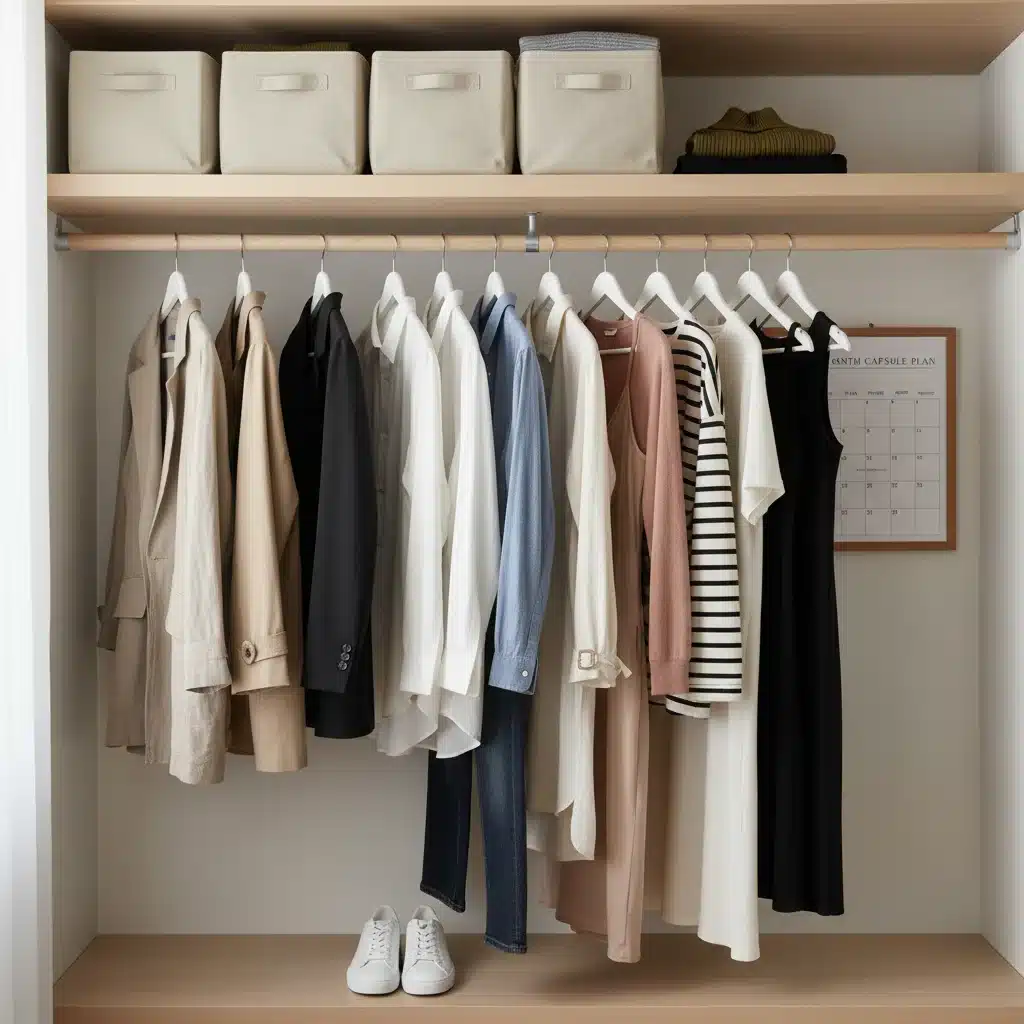
Mastering Your Capsule Wardrobe: A 3-Month Plan for Building 30+ Outfits from 15 Essential Pieces in 2026
Are you tired of staring at a closet full of clothes with nothing to wear? Do you dream of simplifying your mornings, reducing decision fatigue, and embracing a more sustainable approach to fashion? If so, then embarking on a capsule wardrobe plan might be the transformative journey you need. In an age of fast fashion and endless consumerism, the concept of a capsule wardrobe offers a refreshing antidote: a curated collection of versatile, high-quality pieces that can be mixed and matched to create a multitude of outfits. This comprehensive guide will walk you through a detailed 3-month plan, demonstrating how to build a functional and stylish capsule wardrobe of just 15 essential pieces, capable of generating over 30 unique outfits for any occasion in 2026.
The beauty of a capsule wardrobe lies in its simplicity and efficiency. It’s not about deprivation; it’s about intentionality. By carefully selecting each item, you invest in quality over quantity, reduce clutter, and free up mental space. Imagine the time saved each morning, the money saved from impulse purchases, and the reduced environmental impact. This isn’t just a trend; it’s a lifestyle shift that empowers you to define your personal style with clarity and confidence. Let’s dive into how you can achieve this wardrobe mastery.
Understanding the Core Principles of a Capsule Wardrobe
Before we embark on our 3-month capsule wardrobe plan, it’s crucial to grasp the foundational principles that make this approach so effective. A capsule wardrobe is more than just a small collection of clothes; it’s a philosophy that prioritizes versatility, quality, and personal style.
Advertisements
Defining Versatility and Mix-and-Match Potential
At the heart of any successful capsule wardrobe is versatility. Every item you select should have the potential to be worn in multiple ways, with different pieces, and for various occasions. Think about items that can be dressed up or down, layered, or accessorized to create distinct looks. For example, a classic white button-down shirt can be worn with jeans for a casual look, tucked into tailored trousers for the office, or open over a dress for a relaxed weekend vibe. This inherent adaptability is what allows a small number of items to generate a vast array of outfits.
The Importance of Quality Over Quantity
When you’re building a capsule wardrobe, you’re making an investment. Instead of buying numerous cheap, trendy items that quickly fall apart or go out of style, you’ll focus on acquiring fewer, higher-quality pieces. These items are designed to last, withstand frequent wear and washing, and maintain their appearance over time. While the initial cost might be higher, the long-term savings are significant, as you won’t need to constantly replace worn-out garments. Furthermore, better quality often means better fit and feel, contributing to your overall comfort and confidence.
Identifying Your Personal Style and Lifestyle Needs
Your capsule wardrobe should be a reflection of who you are and how you live. Before you even think about specific garments, take time to understand your personal style. What colors do you gravitate towards? What silhouettes flatter your body type? What aesthetic makes you feel most authentic? Equally important is considering your lifestyle. Do you work in a formal office environment, or is your job more casual? Do you spend weekends hiking or attending social events? Your daily activities will dictate the types of clothes you need most. A corporate professional’s capsule will look different from a stay-at-home parent’s or a freelance artist’s. This introspection is a critical first step in tailoring your capsule wardrobe plan to your unique needs.
The Benefits Beyond the Closet
The advantages of a capsule wardrobe extend far beyond a tidy closet. You’ll experience reduced decision fatigue, as having fewer, well-matched options simplifies your morning routine. This translates to more time and mental energy for other aspects of your life. Financially, you’ll save money by making fewer impulse purchases and investing in durable items. Environmentally, you’ll contribute to sustainable fashion by reducing textile waste and supporting ethical production. Ultimately, a capsule wardrobe fosters a sense of calm, clarity, and intentionality in your daily life.
Month 1: The Foundation – Declutter, Define, and Acquire Core Pieces
The first month of your capsule wardrobe plan is all about setting a strong foundation. This involves a thorough decluttering process, defining your aesthetic, and strategically acquiring the initial core pieces.
Week 1: The Great Wardrobe Purge
This is arguably the most challenging but also the most liberating step. Take everything out of your closet and drawers. Yes, everything! Create four piles:
- Love It: These are items you wear regularly, that fit well, and make you feel fantastic. These are strong contenders for your capsule.
- Maybe: Items you like but don’t wear often, or that need minor repairs. Put these in a box and revisit them in a month. If you haven’t thought about them, it’s time to let them go.
- Donate/Sell: Items that don’t fit, are out of style, or you simply don’t love anymore. Be ruthless!
- Discard: Items that are damaged beyond repair.
During this process, pay attention to patterns. What colors do you consistently love? What fabrics feel good? What types of garments do you wear most often? This information will be invaluable for the next step.
Week 2: Defining Your Color Palette and Style Aesthetic
With a clearer view of what you own, it’s time to define your ideal capsule wardrobe. Choose a primary color palette – typically 2-3 neutral base colors (e.g., black, navy, grey, white, beige) and 1-2 accent colors (e.g., emerald green, rust, blush pink, cobalt blue). Ensure these colors complement each other and your skin tone. This limited palette will ensure maximum mix-and-match potential.
Next, articulate your personal style. Are you classic, bohemian, minimalist, edgy, preppy? Create a mood board on Pinterest or simply write down keywords that describe your desired aesthetic. This clarity will guide your future purchases and ensure every piece aligns with your vision.
Weeks 3-4: Acquiring the First 7-8 Essential Pieces
Now, it’s time to start building! Based on your defined style and color palette, identify the absolute core items that will form the backbone of your wardrobe. Aim for 7-8 pieces this month. These should be highly versatile, foundational items. Consider:
- Bottoms (2-3): A pair of well-fitting jeans (dark wash or black), tailored trousers, and perhaps a versatile skirt (pencil or A-line) or black leggings.
- Tops (3-4): A classic white or cream t-shirt, a high-quality long-sleeved top (striped or solid neutral), a versatile blouse (silk or cotton), and a simple knit sweater.
- Outerwear (1): A classic trench coat, a denim jacket, or a versatile blazer that can be layered.
Focus on timeless designs and quality fabrics. Remember, each piece should ideally be able to pair with at least 3-4 other items in your emerging capsule. This initial selection is crucial for the success of your capsule wardrobe plan.
Month 2: Expanding Your Options – Adding Versatility and Layers
In your second month, you’ll expand upon your core foundation, adding pieces that enhance versatility, introduce layering options, and allow for more diverse outfit combinations. You’ll add another 4-5 pieces to reach approximately 12-13 items.
Week 5-6: Evaluating Your Initial Capsule and Identifying Gaps
Spend time wearing and experimenting with the 7-8 pieces you acquired in Month 1. What outfits are you naturally creating? What feels missing? Do you need more formal options, or perhaps something for a specific activity? This real-world testing is invaluable. Make a list of any gaps or needs that emerge. Perhaps you realize you need a warmer layer, or a more polished top for work meetings.
Week 7-8: Strategic Additions for Enhanced Mix-and-Match
Based on your evaluation, strategically add 4-5 new pieces. These should complement your existing items and fill the identified gaps. Think about:
- Bottoms (1): Perhaps a pair of comfortable but stylish black pants, or a different style of skirt/trousers than your initial selection.
- Tops (2): A dressier top for evenings, a basic layering camisole, or another sweater in a complementary color.
- Dress (1): A versatile little black dress (LBD) or a simple shift dress that can be styled in multiple ways.
- Outerwear/Layer (1): A cardigan, a denim jacket (if you chose a blazer initially), or a lightweight scarf that adds color and warmth.
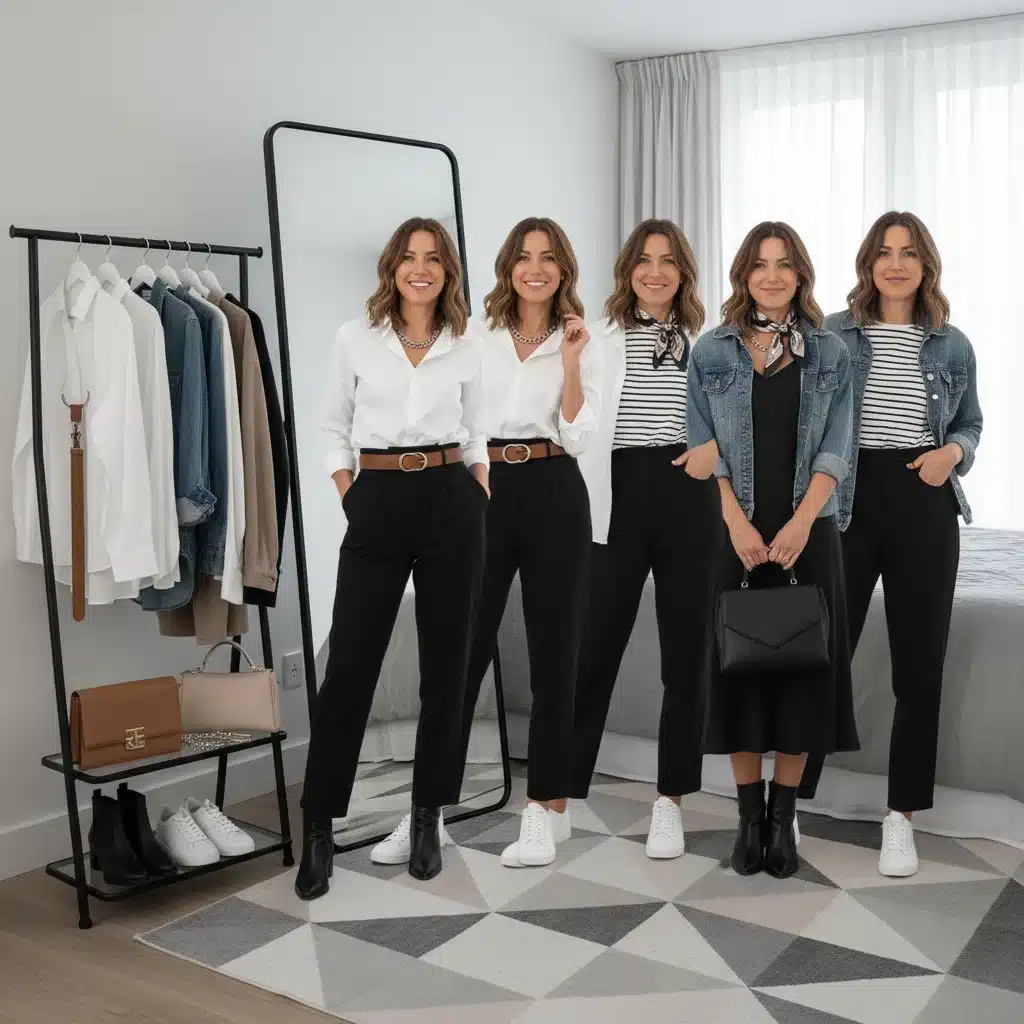
The goal is to increase the number of potential outfits exponentially. Each new item should unlock new combinations with your existing pieces. For instance, a simple black dress can be worn with your blazer for work, with a denim jacket for casual outings, or dressed up with accessories for an evening event. This systematic addition is key to a robust capsule wardrobe plan.
Month 3: The Finishing Touches – Accessories, Shoes, and Outfit Planning
The final month of your capsule wardrobe plan is dedicated to refining your collection, integrating accessories, and developing a system for outfit planning to maximize your 15 pieces.
Week 9-10: Completing Your 15 Essential Pieces and Curating Accessories
You should now have around 12-13 core clothing items. For the remaining 2-3 pieces, consider what truly elevates your wardrobe and fills any remaining functional or stylistic needs. This might be a statement piece that reflects your personality, a specific type of shirt, or another versatile bottom. Once your 15 clothing items are selected, turn your attention to accessories.
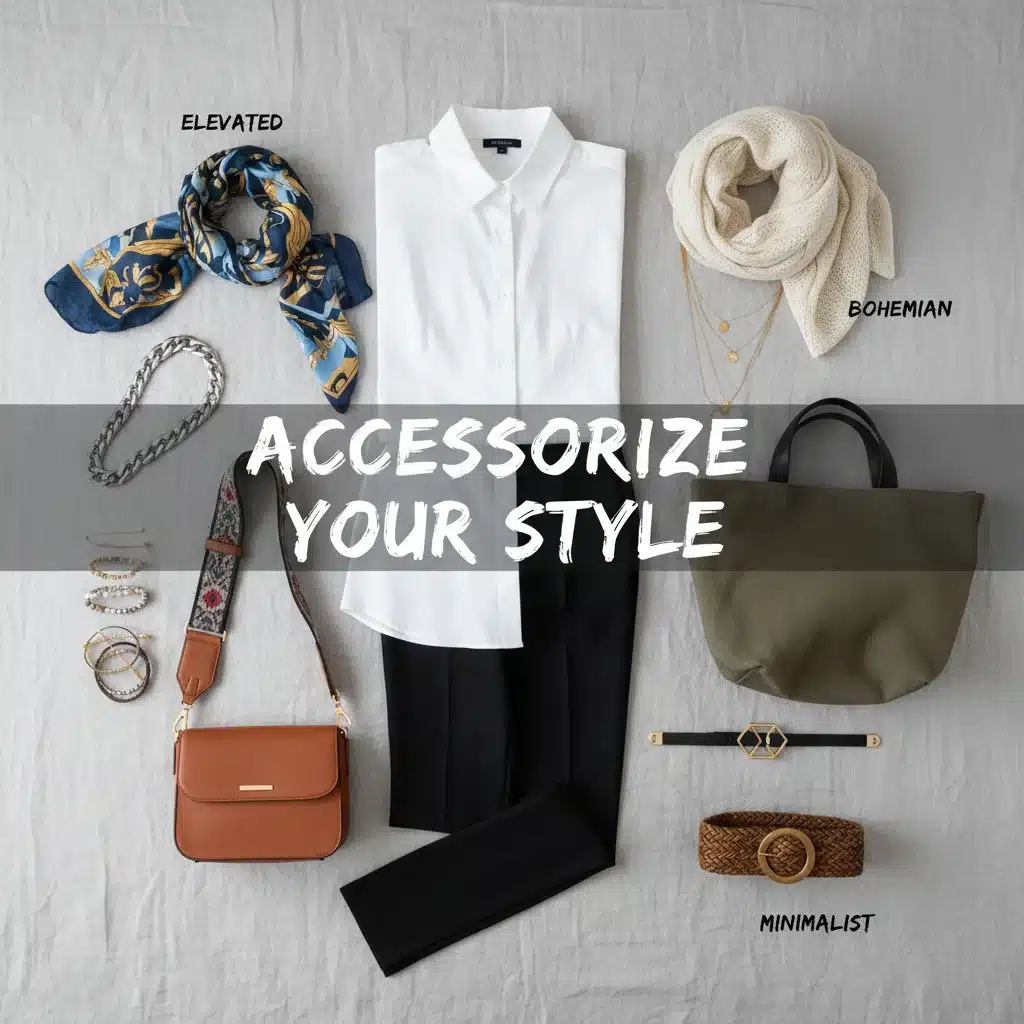
Accessories are the unsung heroes of a capsule wardrobe. They allow you to transform a basic outfit into something entirely new without needing more clothing. Focus on:
- Scarves (1-2): Versatile for warmth, color, or style.
- Jewelry (3-5): A mix of delicate and statement pieces (e.g., simple studs, a statement necklace, a classic watch).
- Belts (1-2): To cinch waists, add definition, or break up an outfit.
- Bags (2-3): A practical everyday bag, a smaller cross-body or clutch for evenings, and perhaps a tote for work/errands.
- Shoes (3-4): This is crucial. Aim for versatility: comfortable everyday flats/sneakers, versatile ankle boots, classic heels/sandals, and perhaps a dressier pair. Choose styles and colors that complement your entire clothing capsule.
Remember, accessories are about adding personality and function. Choose items you genuinely love and that align with your overall aesthetic.
Week 11-12: Outfit Planning and Maximizing Your 30+ Looks
With your 15 core clothing items and carefully curated accessories and shoes, you’re now ready to unlock the true potential of your capsule wardrobe plan. The goal is to create over 30 distinct outfits. Here’s how:
- Document Your Outfits: Take photos of different combinations. This visual library will be incredibly helpful on busy mornings.
- Mix and Match Systematically: Start with one bottom, then try every possible top that pairs with it. Then, add different layers (blazer, cardigan, jacket). Finally, experiment with different shoes and accessories.
- Utilize Layering: Layering is key to extending the life and versatility of your pieces. A simple t-shirt under a sweater, or a blouse under a blazer, creates entirely new looks and adapts to different temperatures.
- Accessorize Strategically: The same dress can look casual with sneakers and a denim jacket, professional with a blazer and heels, or elegant with statement jewelry and a clutch.
- Consider Occasion: Categorize your outfits by occasion (work, casual, evening, weekend). This helps ensure you have appropriate options for all aspects of your life.
By the end of this month, you should have a clear understanding of how each piece works within your capsule, and a mental (or physical) catalog of numerous outfit possibilities. This systematic approach transforms a small collection into an endless source of style.
Sample 15-Piece Capsule Wardrobe (Adapt to Your Style)
To give you a concrete idea, here’s a potential 15-piece clothing capsule. Remember to adapt this to your personal style, climate, and lifestyle. This example focuses on a versatile, smart-casual aesthetic with a neutral base (black, white, grey) and a pop of color (navy or olive green).
Bottoms (5 pieces)
- 1 Pair Dark Wash Jeans: Essential for casual wear, easily dressed up or down.
- 1 Pair Black Tailored Trousers: Perfect for work or more formal occasions.
- 1 Pair White/Cream Trousers or Jeans: A fresh alternative to dark bottoms, especially for warmer seasons.
- 1 Versatile Skirt (Pencil or A-line, neutral color): Can be worn professionally or casually.
- 1 Pair Comfortable Leggings/Joggers: For lounging, travel, or very casual outings.
Tops (7 pieces)
- 2 Basic T-Shirts (White, Black/Grey): Foundation for layering or casual wear.
- 1 Long-Sleeved Top (Neutral or Striped): Great for layering or on its own.
- 1 Classic White Button-Down Shirt: Incredibly versatile, from formal to relaxed.
- 1 Versatile Blouse (Silk, Satin, or Cotton in a complementary color): Adds polish and can be dressed up or down.
- 1 Knit Sweater/Cardigan (Neutral): Essential for warmth and layering.
- 1 Dressier Top: For evenings or when you want to feel more elegant.
Dresses/Outerwear (3 pieces)
- 1 Little Black Dress (LBD) or Versatile Midi Dress: The ultimate chameleon, adaptable for many occasions.
- 1 Blazer (Neutral): Instantly elevates any outfit, perfect for work or smart-casual.
- 1 Versatile Outerwear (Trench Coat, Denim Jacket, or Leather Jacket): Provides warmth, style, and protection from elements.
This sample provides a robust starting point. Imagine the combinations: your dark wash jeans with a white tee, blazer, and sneakers; or the LBD with a knit sweater over it and boots; or tailored trousers with your silk blouse and trench coat. The possibilities quickly multiply!
Maintaining Your Capsule Wardrobe Beyond 3 Months
Building your capsule wardrobe is an achievement, but maintaining it is an ongoing process. The goal isn’t to create a static collection, but a dynamic one that evolves with your life, style, and seasonal needs. This ongoing maintenance is crucial for the long-term success of your capsule wardrobe plan.
Seasonal Adjustments and Swaps
Most people benefit from a seasonal capsule wardrobe. This doesn’t mean starting from scratch every few months, but rather swapping out items that are unsuitable for the current weather. For example, in winter, you might swap lighter blouses for heavier knits and add a warmer coat. In summer, you’d reintroduce linen and lighter fabrics. Store off-season items neatly, and use the swap as an opportunity to reassess what you truly wore and loved from the previous season.
One In, One Out Rule
To prevent your capsule from creeping back into clutter, adopt the “one in, one out” rule. If you buy a new item, something similar must leave your wardrobe. This forces you to make conscious purchasing decisions and ensures your collection remains lean and intentional. This rule is a cornerstone of effective capsule wardrobe management.
Regular Review and Refresh
Schedule a quarterly or semi-annual review of your capsule. Ask yourself:
- Which items did I wear most often? Why?
- Which items did I barely touch? Why?
- Do any pieces need repair or replacement?
- Has my style or lifestyle changed, requiring different types of clothing?
- Are there any items that no longer spark joy or fit well?
This review process allows you to fine-tune your capsule, ensuring every piece serves a purpose and truly reflects your current needs and preferences. It’s an opportunity to let go of items that are no longer working and make thoughtful additions.
Ethical and Sustainable Shopping Practices
As you maintain your capsule, continue to prioritize ethical and sustainable shopping. Research brands, look for quality materials, consider second-hand options, and repair clothes when possible. A capsule wardrobe inherently reduces consumption, making it an eco-friendlier choice, but conscious purchasing further amplifies this positive impact. Your capsule wardrobe plan should align with your values.
Common Challenges and How to Overcome Them
While a capsule wardrobe offers numerous benefits, the journey isn’t always without its hurdles. Being aware of common challenges can help you navigate them effectively and stick to your capsule wardrobe plan.
The Fear of Missing Out (FOMO) and Impulse Buys
One of the biggest challenges is resisting the urge to buy new, trendy items. Fast fashion brands constantly bombard us with new collections, creating a sense of FOMO. To combat this:
- Unsubscribe from marketing emails: Reduce exposure to tempting advertisements.
- Implement a waiting period: If you see something you like, wait 24-48 hours before purchasing. Often, the urge passes.
- Focus on your existing wardrobe: Remind yourself of the versatility and value of the pieces you already own.
- Revisit your style aesthetic: Does the new item genuinely fit your defined style, or is it just a fleeting trend?
Dealing with Special Occasions or Unique Needs
A common concern is how a limited wardrobe handles special events (weddings, formal parties) or specific needs (ski trip, beach vacation). Here are some strategies:
- Borrow: Ask friends or family if you can borrow an item for a one-off event.
- Rent: Services for renting formal wear or specific occasion outfits are becoming increasingly popular and sustainable.
- Shop second-hand: For items you might only wear once or twice, consider thrift stores or consignment shops.
- Invest in adaptable pieces: A versatile dress or suit can often be dressed up or down for various special occasions with different accessories.
Finding the Right Balance for Your Lifestyle
A capsule wardrobe is not a one-size-fits-all concept. What works for one person might not work for another. If you find your initial capsule too restrictive, it’s okay to adjust it. Perhaps you need 20 pieces instead of 15, or a different mix of casual vs. formal wear. The goal is to create a wardrobe that serves you, not the other way around. Don’t be afraid to experiment and fine-tune your capsule wardrobe plan until it feels perfect for your unique life.
The Initial Investment in Quality Pieces
While a capsule wardrobe saves money in the long run, the upfront investment in quality pieces can seem daunting. To manage this:
- Shop strategically: Look for sales, use discount codes, or explore reputable second-hand luxury options.
- Build slowly: Don’t feel pressured to buy everything at once. Use the 3-month plan to spread out your purchases.
- Prioritize: Invest in the most frequently worn items first (e.g., a good pair of jeans, a versatile blazer).
Conclusion: Your Journey to Wardrobe Freedom in 2026
Embarking on this 3-month capsule wardrobe plan is more than just reorganizing your closet; it’s a commitment to a more intentional, sustainable, and stress-free way of life. By the end of this journey, you won’t just have 15 essential pieces; you’ll have a profound understanding of your personal style, a streamlined morning routine, and the confidence that comes from knowing you always have something perfect to wear. You’ll have unlocked the secret to creating 30+ stylish outfits with minimal effort, ready to tackle any day in 2026 with grace and ease.
Remember, this is a personal journey, and there’s no single “right” way to build a capsule wardrobe. Be patient with yourself, celebrate small victories, and embrace the process of discovering what truly works for you. The freedom and clarity that a well-curated capsule wardrobe provides are truly invaluable. So, take a deep breath, open your closet, and begin your transformation today!